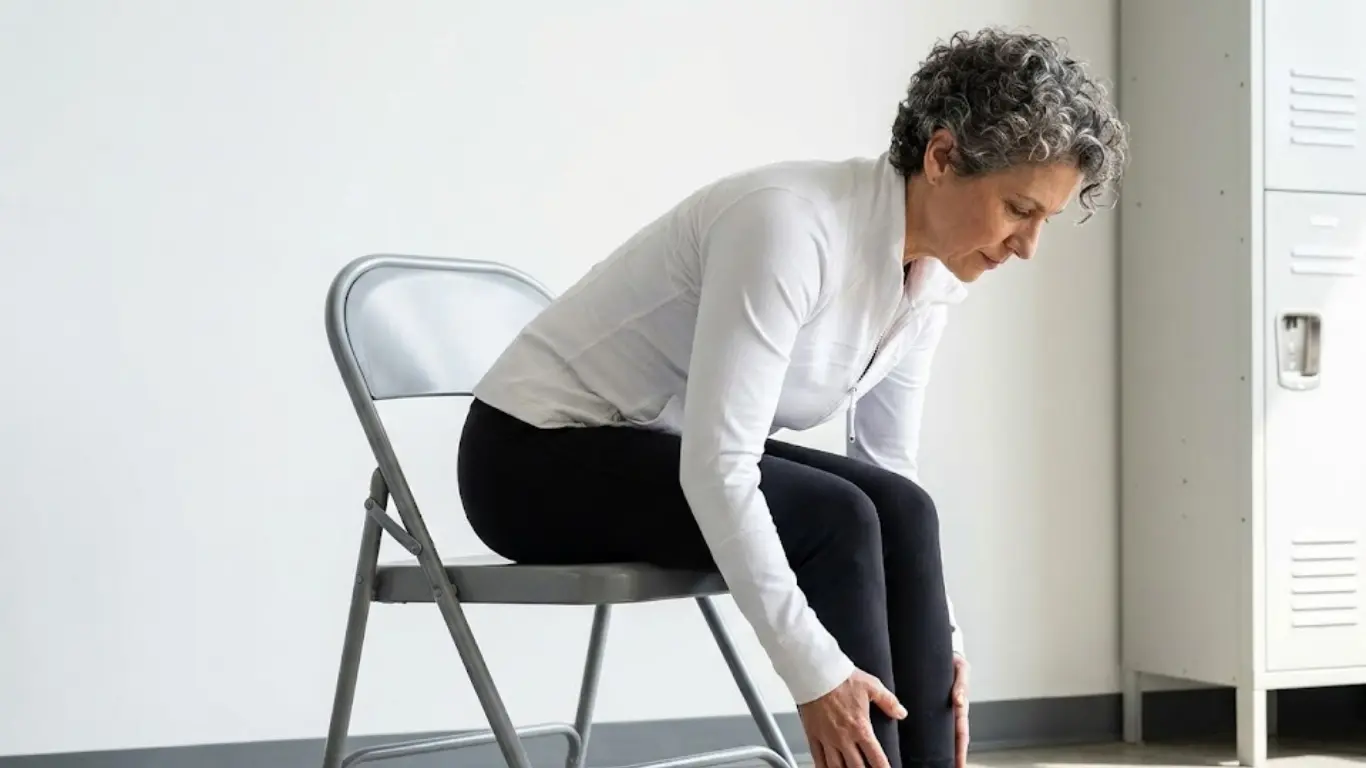
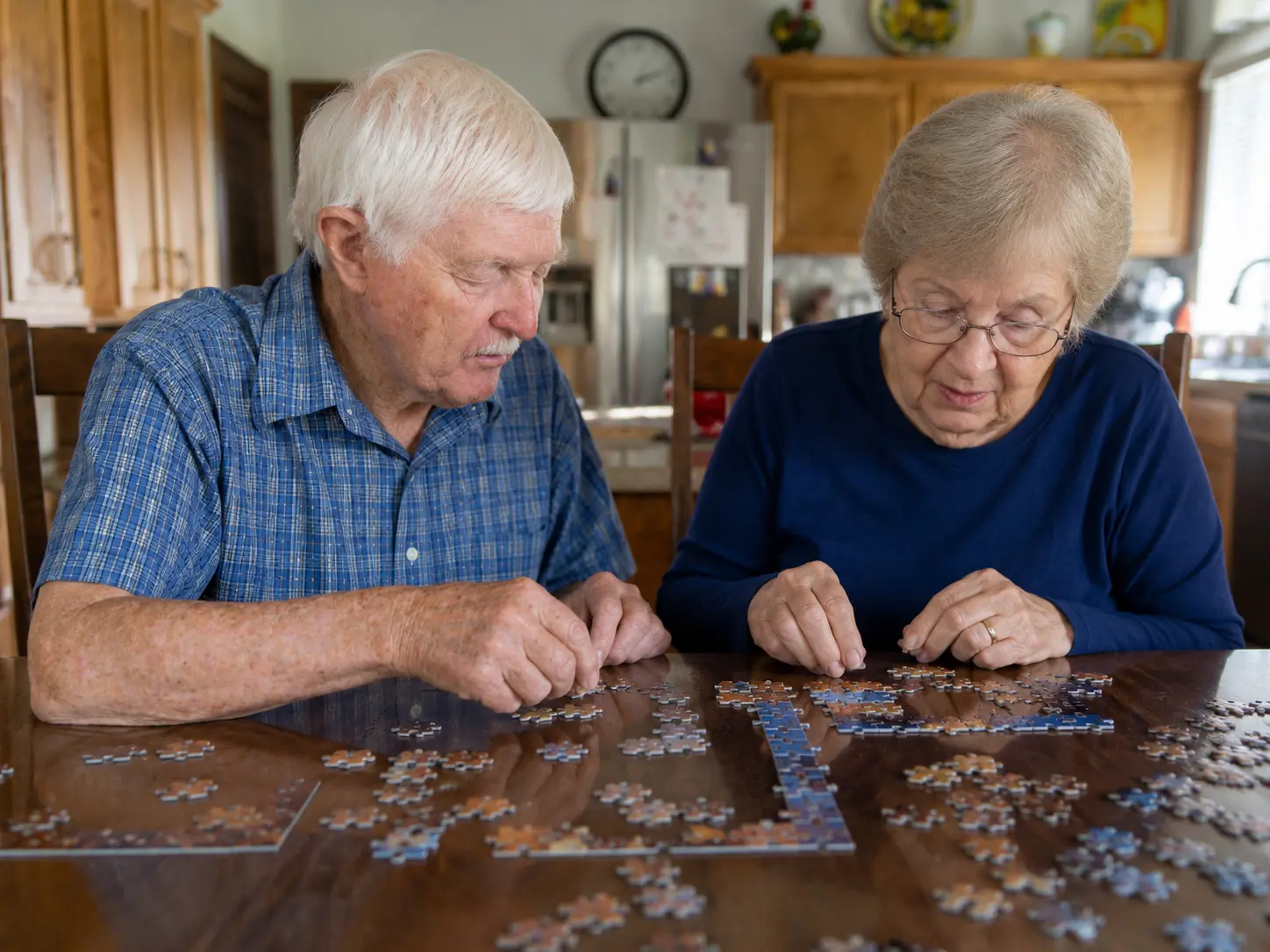
Table of Contents
After working with older adults through yoga, movement, and mindful practices, I’ve learned that healthy aging is rarely about looking younger. For most seniors, it’s about something much more meaningful: being able to keep living the life they value.
You may want to walk without fear, get up from a chair more easily, travel, play with your grandchildren, tend your garden, practice yoga, stay mentally engaged, or simply remain independent in your own home. These everyday abilities are at the heart of what healthy aging really means.
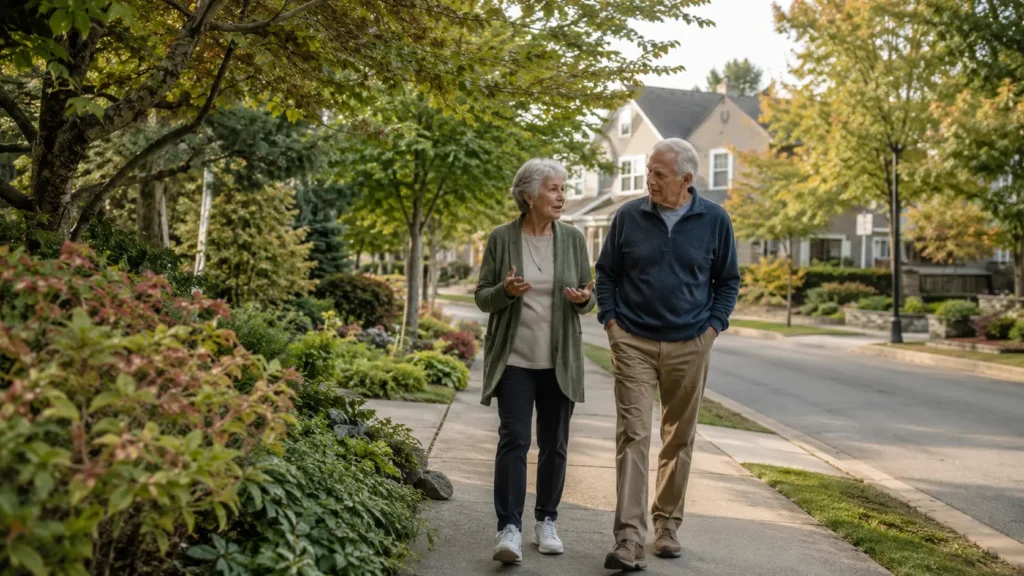
The meaning of healthy aging has also changed. It is no longer simply about preventing disease or adding more years to life. Modern healthy aging frameworks focus on maintaining the physical, mental, and social abilities that allow us to participate in life with independence, dignity, and purpose. This is closely connected to the idea of healthspan—not just how long we live, but how many of those years we can live well.
Growing older is a different experience for every person. Your 60s may bring different priorities from your 70s or 80s, and your health, mobility, relationships, environment, and daily habits all shape your experience.
In this guide, I’ll explain what healthy aging means, the major healthy aging frameworks including the WHO approach, the key pillars that support aging well, and practical ways to stay active, independent, connected, and engaged after 50, 60, 70, and beyond.
Most importantly, healthy aging isn’t about perfection or fighting the natural process of getting older. It’s about supporting your ability to live well as you age—one small, meaningful choice at a time.
What Is Healthy Aging?
When I work with older adults, I notice that most people aren’t really asking, “How can I stay young?”
They are asking something much more practical:
“How can I keep doing the things I love as I get older?”
Maybe that’s walking to the market, getting up from a chair without worrying about balance, traveling, gardening, practicing yoga, playing with your grandchildren, meeting friends, or simply continuing to live independently in your own home.
That is much closer to the modern meaning of healthy aging.
Healthy Aging Definition
The World Health Organization (WHO) defines healthy ageing as:
“the process of developing and maintaining the functional ability that enables well-being in older age.”
At first, that definition can sound technical. But the idea behind it is actually very human.
Healthy aging is about being able to live and do what you have reason to value as you grow older.
And importantly, healthy aging does not mean being free from every disease or health condition. WHO specifically states that being free from disease or infirmity is not a requirement for healthy ageing. Many older adults live with chronic conditions while continuing to maintain well-being and meaningful daily lives.
So if you have arthritis, diabetes, high blood pressure, or another long-term condition, that does not automatically mean you are aging “unhealthily.”
Your health matters—but what you are able to do, the support around you, and your ability to participate in life matter too.
What Does Healthy Aging Actually Mean?
This is where the WHO healthy aging framework becomes especially useful.
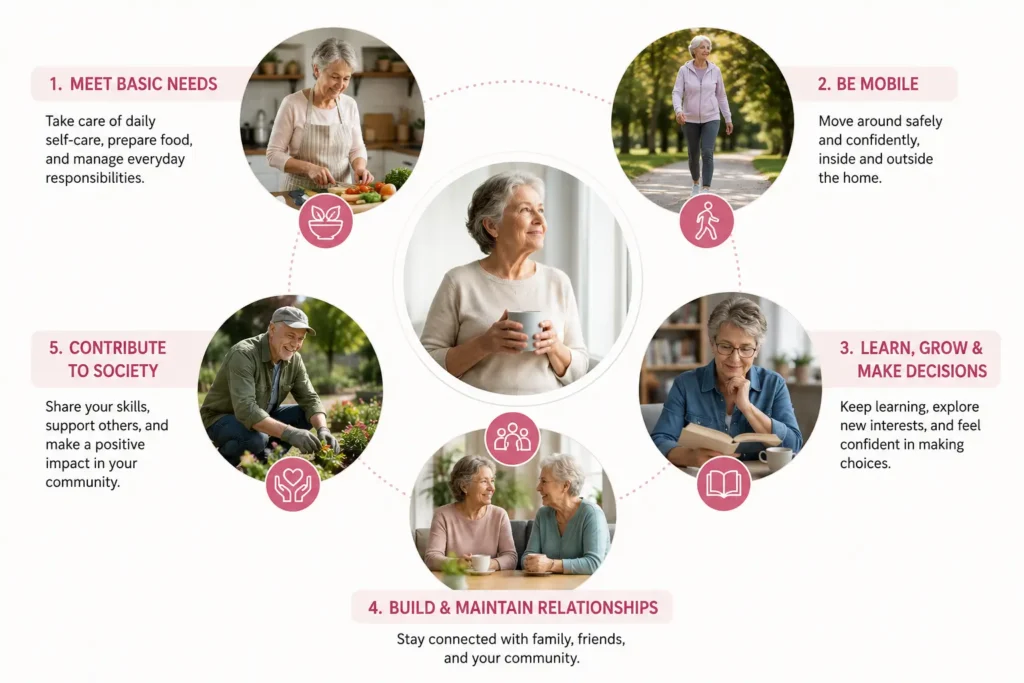
WHO describes functional ability as the ability to:
- meet your basic needs
- move around
- learn, grow, and make decisions
- build and maintain relationships
- contribute to society
Look at how this shows up in ordinary, everyday life.
Functional ability might be the ability to:
Get out of bed and dress yourself.
Walk safely around your home.
Prepare your own meal.
Make decisions about your day.
Visit a friend or attend a family gathering.
Continue a hobby, volunteer, work, learn, or contribute in a way that feels meaningful to you.
These may sound like ordinary things. But for many older adults, being able to continue doing ordinary things independently is exactly what makes healthy aging meaningful.
And this is one reason I prefer talking about ability and independence rather than simply talking about age.
There is no single picture of what a “healthy 70-year-old” or “healthy 80-year-old” should look like.
WHO emphasizes that there is no typical older person. People of the same age can have very different physical and mental capacities and very different support needs.
Your healthy aging journey is therefore personal.
The WHO Healthy Aging Framework: Intrinsic Capacity + Environment
One of the most important ideas to understand about healthy aging is that your ability to function does not depend only on your body.
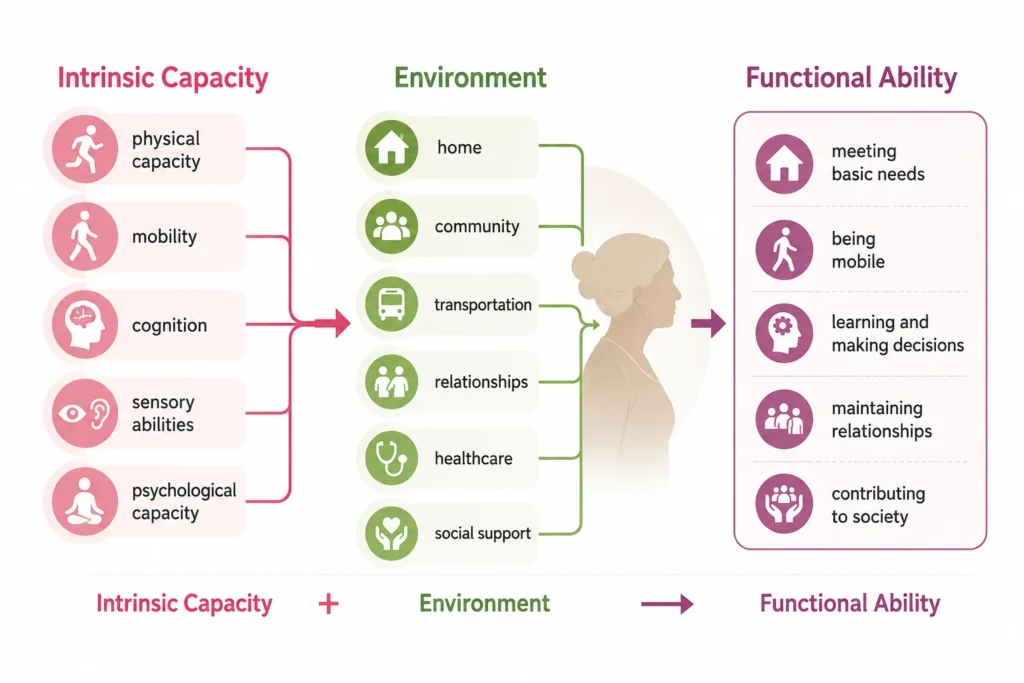
WHO’s framework looks at three connected elements:
Intrinsic capacity + environment + the interaction between them = functional ability.
1. Intrinsic Capacity
Intrinsic capacity means the combination of your physical and mental capacities.
It includes abilities such as:
- walking and moving
- seeing and hearing
- thinking and remembering
- maintaining physical capacity
- psychological functioning
These capacities can change throughout life and can be influenced by health conditions, injuries, age-related changes, and other factors.
But intrinsic capacity is only one part of the picture.
2. Your Environment
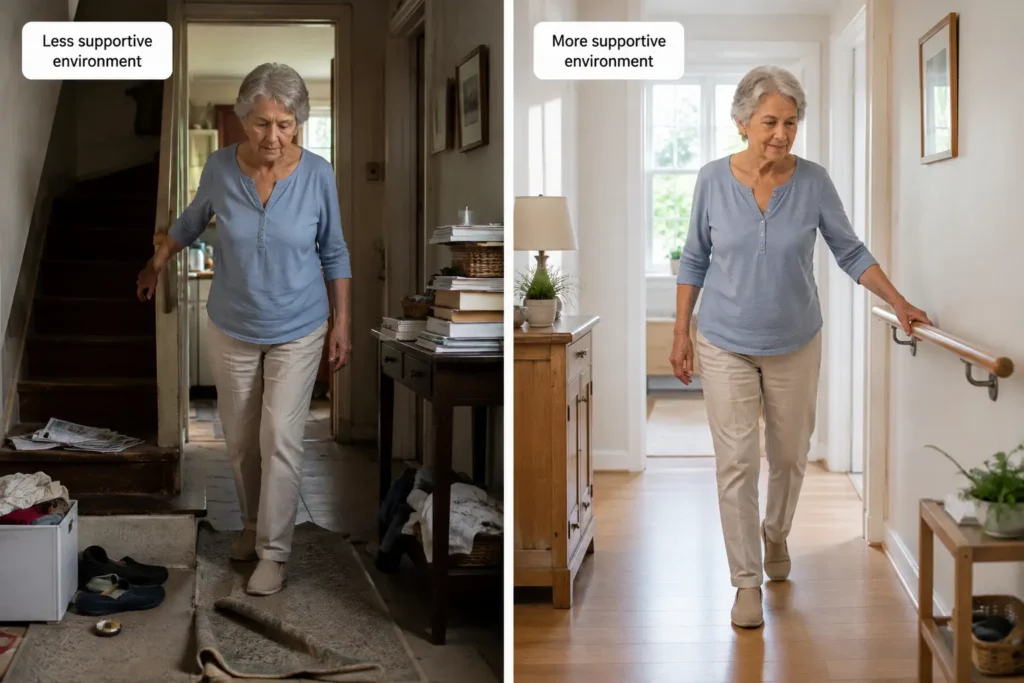
Imagine two older adults who have similar difficulty walking.
One lives in a home with stairs, poor lighting, no nearby transportation, and limited support.
The other has a safer home, accessible transportation, supportive family or community, and appropriate mobility equipment.
Their physical capacity may be similar—but their functional ability in everyday life can be very different.
This is a central insight of the WHO healthy aging framework: the environment can either support or restrict what an older person is able to do.
Your home, neighborhood, transportation, relationships, healthcare, social support, and the accessibility of your surroundings can all matter.
3. Functional Ability
Functional ability is ultimately about what you are able to be and do in your real life.
WHO identifies five broad areas:
Meet basic needs
Can you manage essential daily activities?
Be mobile
Can you move around your home and community?
Learn, grow, and make decisions
Can you continue learning and making choices about your life?
Build and maintain relationships
Can you maintain meaningful connections with other people?
Contribute to society
Can you participate in family, community, work, volunteering, or other activities that matter to you?
When you look at healthy aging this way, it becomes much less about “How old am I?”
And much more about:
“What can I still do, what matters to me, and what can help me continue doing it?”
That is a much more useful question.
Healthy Aging Does Not Mean Preventing Every Health Problem
There is a common misunderstanding that healthy aging means avoiding illness, staying physically strong forever, or maintaining the abilities you had at 30.
That isn’t realistic—and it isn’t the WHO definition.
Healthy aging is a process, not a perfect health status. WHO’s framework recognizes that intrinsic capacity and functional ability can change throughout the life course.
You may develop arthritis and adapt how you move.
You may lose some strength and begin strength exercises appropriate for your abilities.
You may need glasses, hearing support, a cane, or another assistive device.
You may change the way you practice yoga.
You may need more help with certain activities while remaining independent in many others.
Adapting is not failing at healthy aging.
Sometimes healthy aging means improving your capacity. Sometimes it means adapting to a change. And sometimes it means changing your environment or getting the right support so you can continue participating in the life you value.
That is why I don’t think healthy aging should be treated as a competition.
Healthy Aging vs. Active Aging vs. Successful Aging
You may also encounter terms such as active aging and successful aging when researching how to age well.
They overlap, but they are not identical.
Healthy Aging
The WHO approach focuses on functional ability, well-being, intrinsic capacity, and the environment that enables older people to live meaningful lives.
Active Aging
Active aging has traditionally placed greater emphasis on continued participation in social, economic, cultural, spiritual, and civic life. WHO’s current healthy aging approach builds on this broader idea while placing functional ability at the center.
Successful Aging
The term successful aging is often associated with maintaining health and function while remaining engaged with life. However, it can sometimes create the impression that an older person must avoid disease or disability to be considered successful.
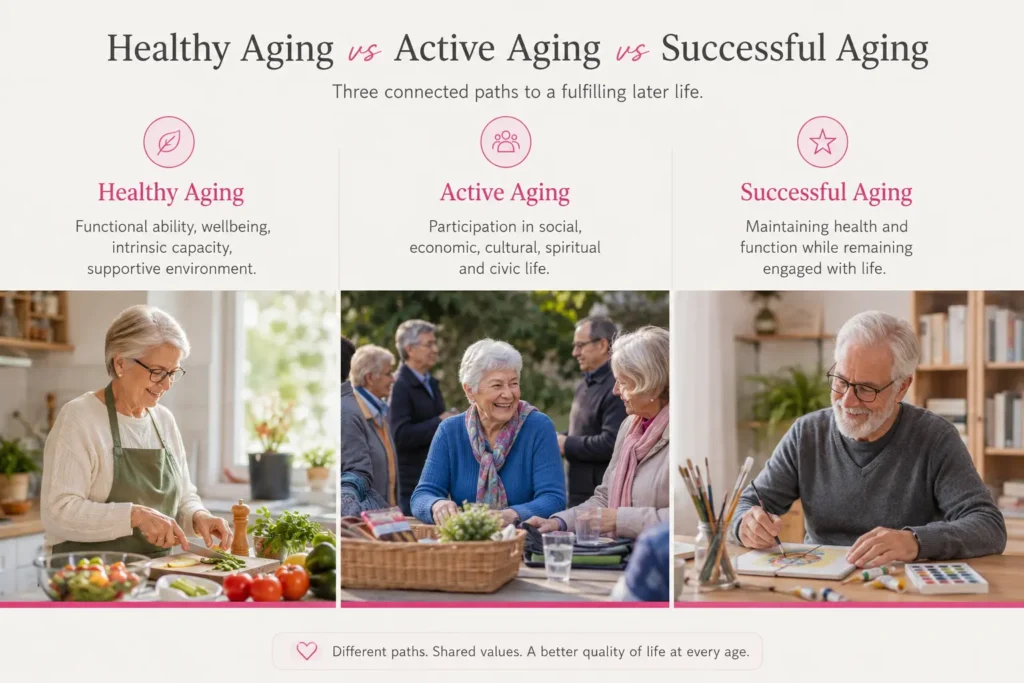
The healthy aging approach is more inclusive.
You can have health challenges and still have purpose, relationships, independence, dignity, and meaningful participation.
For seniors, I think that distinction matters.
Because aging should not feel like a test that you either pass or fail.
What Actually Helps Us Age Well?
Once we understand healthy aging this way, the next question becomes much more interesting:
What can we actually do to support it?
There isn’t one magic habit.
Healthy aging is influenced by multiple, connected areas of life—including physical activity, nutrition, sleep, healthcare, social connection, mental and emotional well-being, and the environments in which we live. The National Institute on Aging, for example, identifies staying active, making healthy food choices, getting enough sleep, and proactively managing healthcare as important parts of supporting healthy aging.
And social connection matters too. The NIA notes that meaningful activities, relationships, hobbies, volunteering, and time with family and friends can support well-being as we age.
But these aren’t isolated “healthy aging hacks.”
They work together.
Movement can support physical function.
Good nutrition supports the body.
Sleep supports recovery.
Social connection supports well-being.
A safe environment can make independence easier.
Purpose gives those extra years meaning.
This is why healthy aging is best understood as a whole-person, life-course approach, rather than a checklist of things you have to do perfectly.
And the good news is that you don’t have to change everything at once.
So, What Are the Pillars of Healthy Aging?
If you’re wondering where to start, the next step is to look at the major areas that influence how well we age—and, more importantly, what the evidence says about each one.
In the next section, we’ll break down the key pillars of healthy aging, including movement and strength, nutrition, sleep, cognitive health, emotional well-being, social connection, independence, and purpose—and look at what you can realistically do in your 50s, 60s, 70s, 80s, and beyond.
The Healthy Aging Concept
When you hear healthy aging, you might picture exercise, healthy food, or staying free from illness. Those things matter—but they are only part of the picture.
For me, the more useful question is this:
As I get older, can I keep doing the things that make my life feel like my own?
For one senior, that might mean walking to the local shop, getting up from a chair comfortably, practicing yoga, cooking independently, or meeting friends. For another, it might mean traveling, gardening, spending time with grandchildren, volunteering, or simply feeling safe and confident at home.
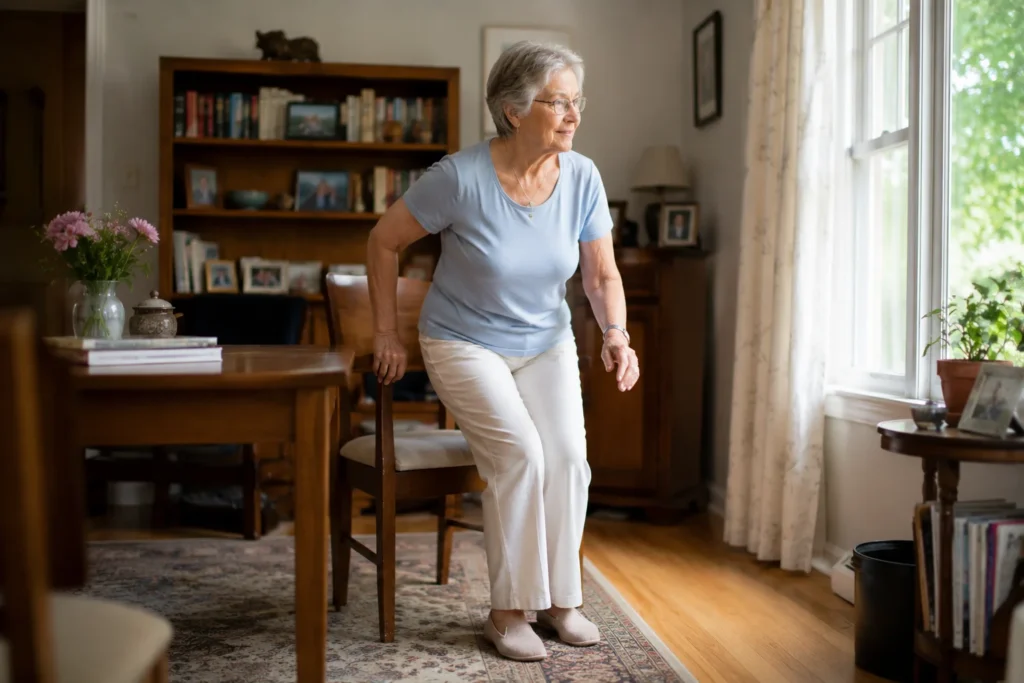
This is close to how the World Health Organization (WHO) defines healthy aging: “the process of developing and maintaining the functional ability that enables well-being in older age.” WHO’s approach looks beyond disease and asks what a person is actually able to do in everyday life.
That matters because healthy aging does not require perfect health. Someone can live with arthritis, diabetes, reduced vision, or another chronic condition and still age well. What matters is the person’s ability to meet daily needs, move through life, maintain relationships, make decisions, and participate in activities that matter to them.
Why Healthy Aging Matters
Living longer is wonderful. But more years do not automatically mean better years.
Healthy aging is about protecting the abilities and opportunities that help older adults maintain:
- independence and mobility
- strength, balance, and confidence
- meaningful relationships
- mental and emotional well-being
- purpose and participation
- dignity and quality of life
And there is no single picture of what this should look like.
A 65-year-old who travels every year and a 65-year-old who prefers a quiet life at home may both be aging well. A senior who needs a walking aid or help with certain tasks has not somehow “failed” at healthy aging.
Healthy aging should support the person you are—not ask you to become someone else.
What Shapes Healthy Aging?
Healthy aging develops over a lifetime. Genetics and circumstances matter, but so do factors that can often be influenced: physical activity, nutrition, sleep, healthcare, mental well-being, social connection, and the environment around us. WHO’s life-course approach recognizes that health and functional ability in later life are shaped by experiences and conditions accumulated over time.
For seniors, this can be surprisingly practical.
Regular movement can help preserve strength, balance, mobility, and physical function. The National Institute on Aging identifies physical activity as an important part of healthy aging. That doesn’t mean every older adult needs a hard workout—walking, strength exercises, balance work, mobility practice, and appropriately adapted yoga can all have a place.
Food, sleep, preventive healthcare, and management of existing health conditions matter too. So do the less visible parts of aging: having people to talk to, reasons to get out of bed, activities you enjoy, and a sense that you still have a place in your community.
And sometimes the solution isn’t another health habit at all.
A handrail, better lighting, safer flooring, accessible transportation, a mobility aid, or support at home can make everyday independence much easier. WHO’s healthy aging approach recognizes that what a person can do depends not only on their own capacities, but also on the environment around them.
Healthy Aging Is Not About Staying Young
I don’t think healthy aging should become another version of the anti-aging industry.
Aging is not something we need to defeat.
The goal is to stay as capable as possible, adapt when our abilities change, and have the support we need to continue participating in life.
That might mean building strength at 60, improving balance at 70, adapting yoga after a health change, learning to use a mobility aid, or making the home safer at 80.
There is no single healthy aging formula that works for everyone.
And that is exactly why the healthy aging frameworks developed by organizations such as WHO are useful. They give us a way to understand aging beyond simply counting diseases or years lived.
Next, we’ll look at the major healthy aging frameworks—including the WHO framework—and what they actually mean for an older person’s health, independence, and everyday life.
The WHO Healthy Aging Framework
For decades, aging was often viewed through a medical lens. The conversation focused on diseases, disabilities, and what people might lose as they grew older.
The World Health Organization (WHO) helped change that perspective.
Instead of asking, “What diseases does a person have?”, the WHO framework asks a more meaningful question:
“Can this person continue doing the things that matter to them?”
This shift transformed how governments, researchers, healthcare professionals, and aging organizations think about older adults. Today, the WHO Healthy Aging Framework is considered one of the most influential models for understanding healthy ageing worldwide.
What Is Functional Ability?
According to the World Health Organization, functional ability is the ability to do the things that people value and have reason to value.
In simple terms, functional ability is what allows a person to live life on their own terms.
For an older adult, functional ability may include:
- Walking safely and confidently
- Climbing stairs
- Shopping independently
- Preparing meals
- Maintaining relationships
- Participating in hobbies
- Traveling and exploring
- Volunteering or helping family members
- Practicing yoga or other physical activities
Two people may have the same medical condition but very different levels of functional ability.
For example, someone with arthritis may still garden, travel, exercise, and remain independent. Under the WHO healthy aging model, that person may still be experiencing healthy aging because they continue to do the things that matter most to them.
This focus on ability rather than illness is one of the defining features of the healthy aging framework.
What Is Intrinsic Capacity?
Intrinsic capacity refers to the combination of all the physical and mental abilities a person possesses.
Think of it as your internal reserve of health and capability.
Intrinsic capacity includes:
- Physical strength
- Mobility and balance
- Memory and cognitive function
- Vision and hearing
- Emotional wellbeing
- Energy levels and vitality
These capacities naturally change throughout life. However, healthy habits can help preserve them for much longer than many people assume.
Regular movement, nutritious eating, quality sleep, social engagement, stress management, and lifelong learning all contribute to maintaining intrinsic capacity.
The WHO framework recognizes that healthy aging is not only about preventing decline but also about supporting and maximizing these capacities throughout older age.
The Decade of Healthy Ageing
Recognizing the importance of healthy aging worldwide, the United Nations declared 2021–2030 as the Decade of Healthy Ageing.
Supported by the World Health Organization, this global initiative aims to improve the lives of older people, their families, and the communities in which they live.
The Decade of Healthy Ageing focuses on four major action areas:
Changing How We Think About Age and Aging
Many older adults face stereotypes and age-related discrimination.
The initiative encourages societies to recognize the value, contributions, and potential of older people.
Building Age-Friendly Communities
Communities can support healthy aging by creating environments that are safe, accessible, and welcoming for older adults.
This includes transportation, housing, public spaces, and social opportunities.
Providing Integrated Care
Healthcare systems should focus not only on treating diseases but also on maintaining functional ability, independence, and quality of life.
Expanding Access to Long-Term Care
Older adults who require additional support should have access to high-quality care that respects dignity and personal preferences.
The Decade of Healthy Ageing reflects a growing global understanding that population aging is not simply a healthcare challenge—it is a societal opportunity.
Why the WHO Model Changed How We Think About Aging
The WHO healthy ageing model fundamentally changed the conversation about aging.
Traditionally, successful aging was often defined by the absence of disease. This created an unrealistic standard because many older adults live with one or more chronic health conditions.
The WHO framework introduced a more practical and compassionate perspective.
It recognizes that:
- Aging is a lifelong process.
- Health exists on a spectrum.
- People can age well even while managing chronic conditions.
- Independence and wellbeing matter as much as medical diagnoses.
- Social and environmental factors are just as important as physical health.
Most importantly, the framework shifts the focus from merely surviving longer to living better.
Instead of measuring aging by years lived alone, the WHO framework emphasizes healthspan, functional ability, dignity, participation, and quality of life.
That is why the WHO healthy aging framework has become a cornerstone of modern healthy ageing research, public health policy, and age-friendly initiatives around the world.
For older adults and their families, its message is simple but powerful:
Healthy aging is not about trying to stay young forever. It is about maintaining the ability to live a meaningful, independent, and fulfilling life for as long as possible.
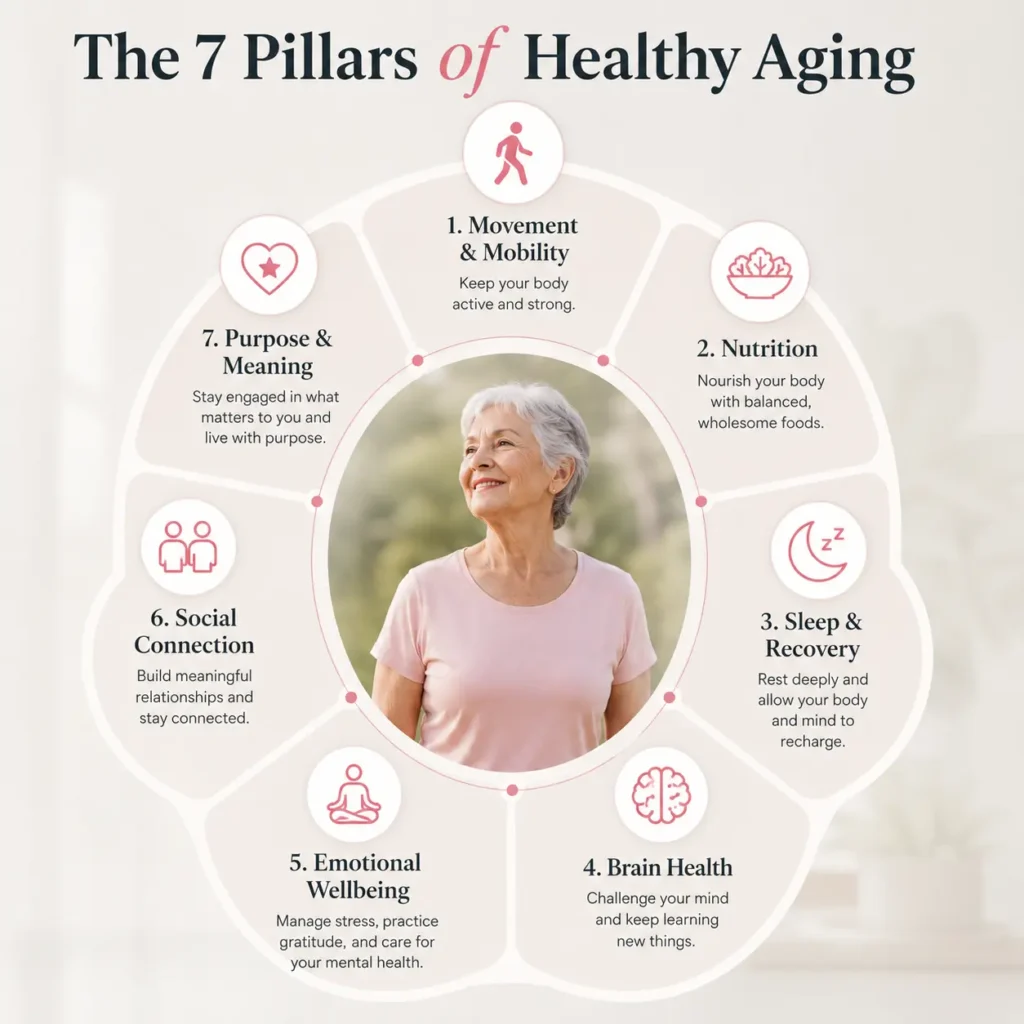
The 7 Pillars of Healthy Aging
Healthy aging is influenced by many parts of everyday life—not just diet and exercise.
Rather than trying to change everything at once, it can be helpful to look at healthy aging through seven key areas. Each one addresses a different aspect of wellbeing, and together they provide a practical framework for building healthier habits as you grow older.
These pillars are not a checklist that needs to be followed perfectly. Your priorities may change over time depending on your health, lifestyle, abilities, and circumstances.
The sections below explore each pillar in detail, including why it matters and practical ways to support it in everyday life.
Pillar 1 — Movement & Mobility
If there is one habit worth protecting as we age, it is regular movement.
Staying physically active can help older adults maintain the abilities that make everyday life possible—from walking and getting out of a chair to climbing stairs, carrying groceries, and staying steady on their feet. Physical activity also supports cardiovascular health, physical function, mood, sleep, and cognitive health.
And healthy aging does not require marathon running or exhausting gym sessions.
Movement can be gentle. It can be adapted. It can happen at home, outdoors, in the water, or from a chair.
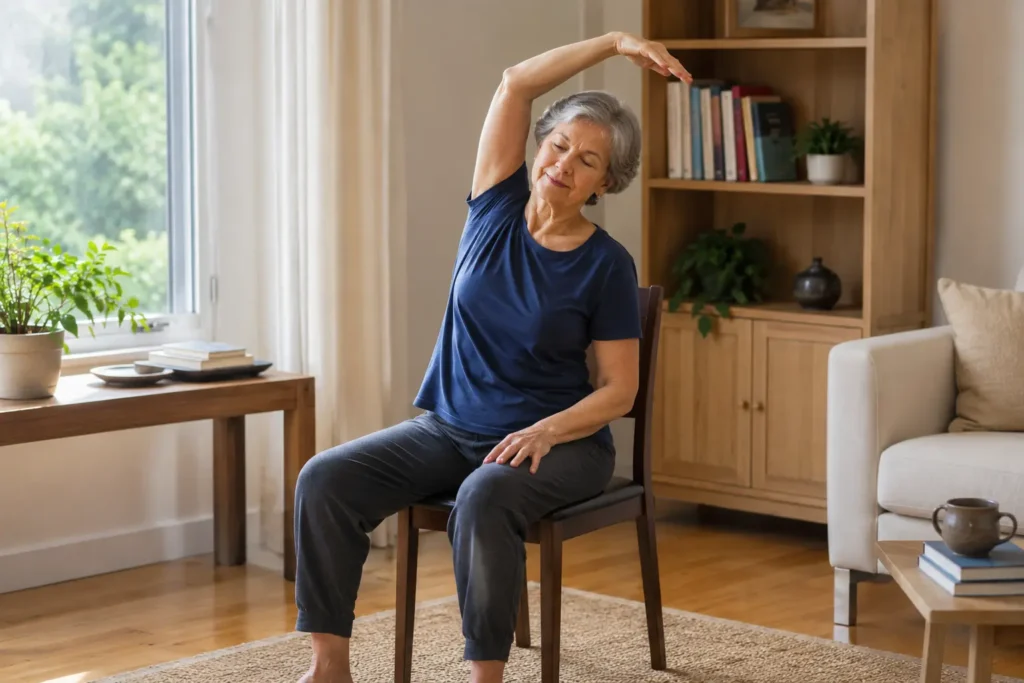
What matters is finding forms of physical activity that are appropriate for your abilities and that you can continue doing regularly.
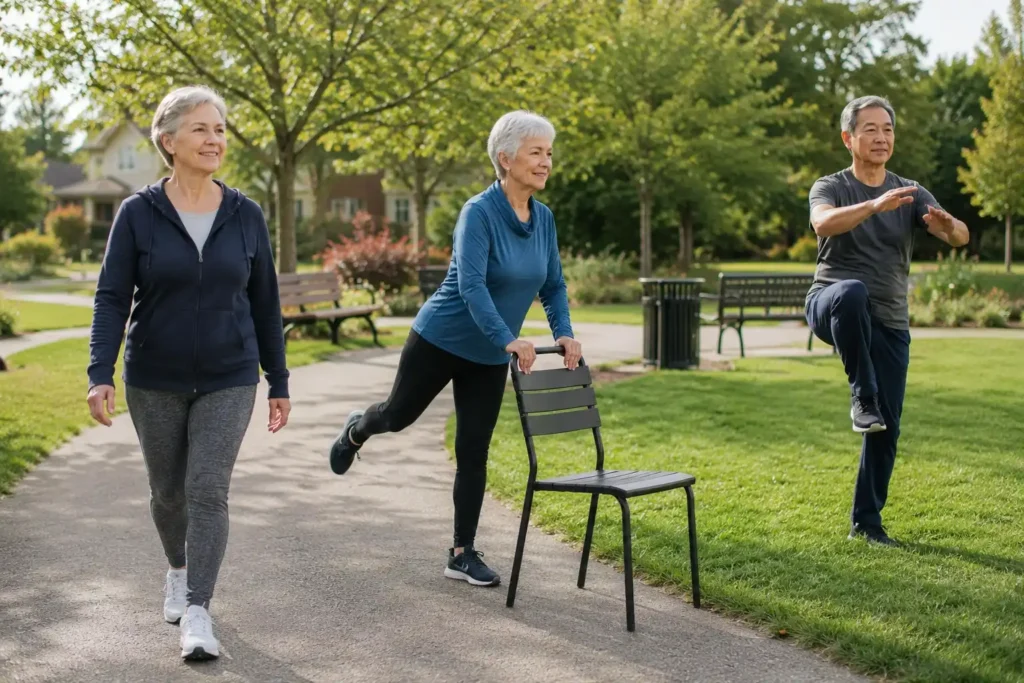
Why Movement Matters for Healthy Aging
The body naturally changes with age. Muscle strength, bone density, joint function, balance, and endurance can change over time, and health conditions or periods of inactivity can affect physical function as well.
Regular physical activity helps support the physical capacities that older adults rely on for independence. WHO includes locomotor capacity—such as muscle strength, balance, endurance, muscle function, power, and joint function—as an important part of intrinsic capacity in healthy aging.
Movement can help older adults:
- Maintain strength and physical function
- Support balance and coordination
- Maintain joint mobility
- Support cardiovascular health
- Stay active and independent in daily life
- Reduce the risk of falls when combined with appropriate balance-focused activity
- Support mood, sleep, and cognitive health
But perhaps the most meaningful benefit is also the simplest: being able to keep doing the things you want to do.
Traveling. Gardening. Shopping independently. Playing with grandchildren. Walking around your neighborhood. Getting up from your favorite chair without struggling.
Healthy aging movement is ultimately about keeping your body capable of participating in your life.
Healthy Aging Exercises
The best healthy aging exercises are not necessarily the hardest ones.
A well-rounded routine can include different types of physical activity, such as:
- Walking or other aerobic activity
- Strength training
- Balance exercises
- Stretching and mobility work
- Chair-based exercises
- Water-based exercise
- Functional movement practice
Different activities serve different purposes, which is why a combination can be more useful than relying on one type of exercise alone. WHO recommends that older adults include regular aerobic activity, muscle-strengthening activity, and, particularly for those with poorer mobility, activities that emphasize balance and help prevent falls.
Your starting point matters, too. Someone who is already active may need a different routine from someone who has been sedentary, is recovering from an illness, or has a mobility limitation.
The goal is not to copy someone else’s workout.
The goal is to find movement that works for your body and your life.
Healthy Aging Yoga
Yoga can be a useful form of movement for older adults because it can bring together several elements of physical and mental practice, including mobility, balance, strength, breathing, and body awareness.
One of its strengths is adaptability. A yoga practice can be modified according to a person’s mobility, fitness level, comfort, and experience.
Healthy aging yoga may support:
- Flexibility and joint mobility
- Balance and stability
- Functional strength
- Body awareness
- Stress management
- Relaxation and emotional wellbeing
For older adults who find floor-based exercise uncomfortable or difficult, chair yoga can offer a more accessible starting point. Movements can be performed while seated or with a chair for support, making it possible to practice mobility, balance, strength, and mindful movement without requiring the body to get down onto the floor.
That does not make chair yoga the right choice for everyone. People with significant mobility limitations, recent injuries, or medical conditions should choose activities appropriate for their individual circumstances and seek professional guidance when needed.
Healthy Aging Physiotherapy
Physiotherapy has a different role from a general exercise routine.
A physiotherapist can assess an individual’s movement, strength, balance, pain, and functional limitations and develop a program based on their specific needs. This can be particularly valuable after surgery or injury, or for people living with conditions that affect movement.
Healthy aging physiotherapy may involve:
- Strength and conditioning
- Balance and fall-prevention work
- Mobility training
- Functional movement
- Pain management
- Posture and movement education
- Rehabilitation following illness, injury, or surgery
Physiotherapy can therefore be part of healthy aging not only when something has gone wrong, but also when an older adult needs professional help to move more safely and confidently.
Strength
Strength becomes increasingly valuable as we age because everyday independence depends on it.
Standing up from a chair, climbing stairs, carrying groceries, lifting household items, and getting in and out of bed all require some degree of muscle strength.
Maintaining strength can support:
- Independence
- Mobility
- Joint stability
- Physical function
- Everyday activities
Strength training does not necessarily mean lifting heavy weights. Depending on a person’s abilities, it can include body-weight exercises, resistance bands, light weights, or other forms of resistance.
For older adults who are new to strength training, recovering from an injury, or living with a health condition, the appropriate exercises and level of resistance should be individualized.
Balance
Balance is another important part of staying independent.
Good balance helps us walk, turn, change direction, navigate uneven surfaces, climb stairs, and move safely through everyday environments.
Balance can be practiced through targeted exercises and activities such as yoga, tai chi, and functional movement training. For older adults with poorer mobility, WHO specifically recommends physical activity that emphasizes balance and helps prevent falls.
Balance work does not have to be complicated. What matters is practicing movements that challenge stability appropriately and safely.
Flexibility & Mobility
Flexibility and joint mobility help us move through the range of motion needed for everyday activities.
Regular mobility work and stretching may help maintain comfortable movement and make activities such as reaching, turning, bending, and getting dressed easier.
Healthy aging is not about becoming extremely flexible.
It is about maintaining enough mobility to move through everyday life with greater comfort and ease.
Endurance
Endurance is the ability to sustain physical activity over time.
Walking, swimming, cycling, dancing, and other forms of aerobic activity can help build endurance while supporting cardiovascular fitness.
Better endurance can make everyday activities feel more manageable and can help older adults remain physically active for longer periods.
As with other forms of exercise, the right intensity depends on the individual. Older adults who have been inactive or who have health conditions should choose activity levels that are appropriate for their circumstances.
Building a Movement Routine That Lasts
There is no single “best” exercise for healthy aging.
A strong movement routine is one that develops several aspects of physical function while fitting comfortably into your actual life.
You might walk for cardiovascular fitness, practice strength exercises a few times a week, work on balance, stretch when your body feels stiff, and use chair yoga as a gentle way to combine movement with breathing and body awareness.
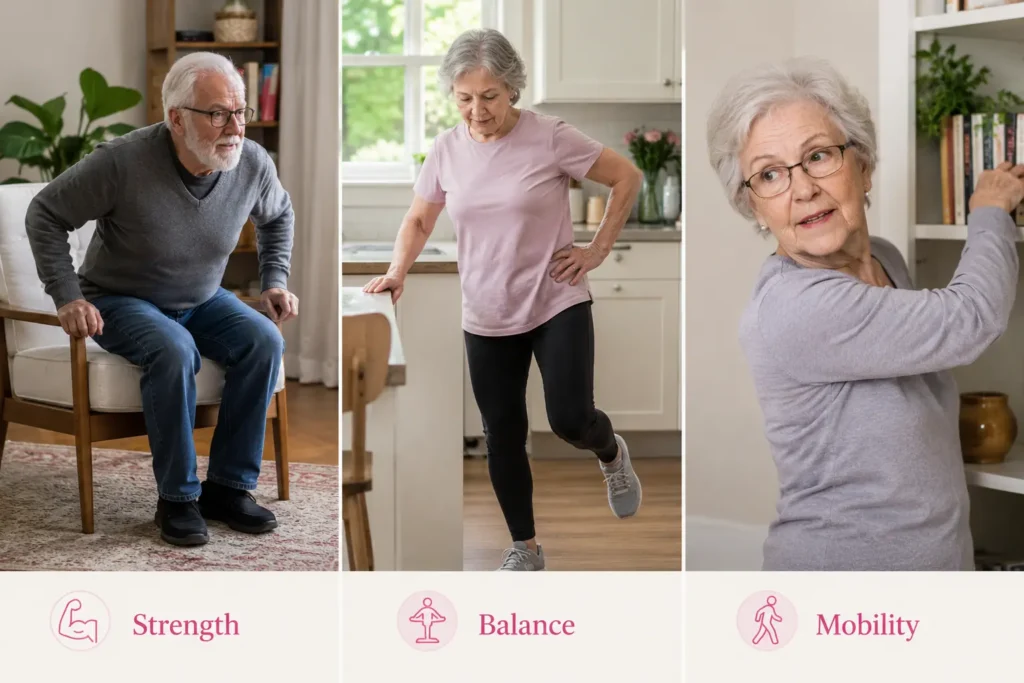
You don’t need to do everything in one session.
The goal is to keep your body moving, your abilities supported, and your routine realistic enough to continue.
Movement is not about fighting the aging process.
It is about giving your body the support it needs to keep you participating in the life you want to live.
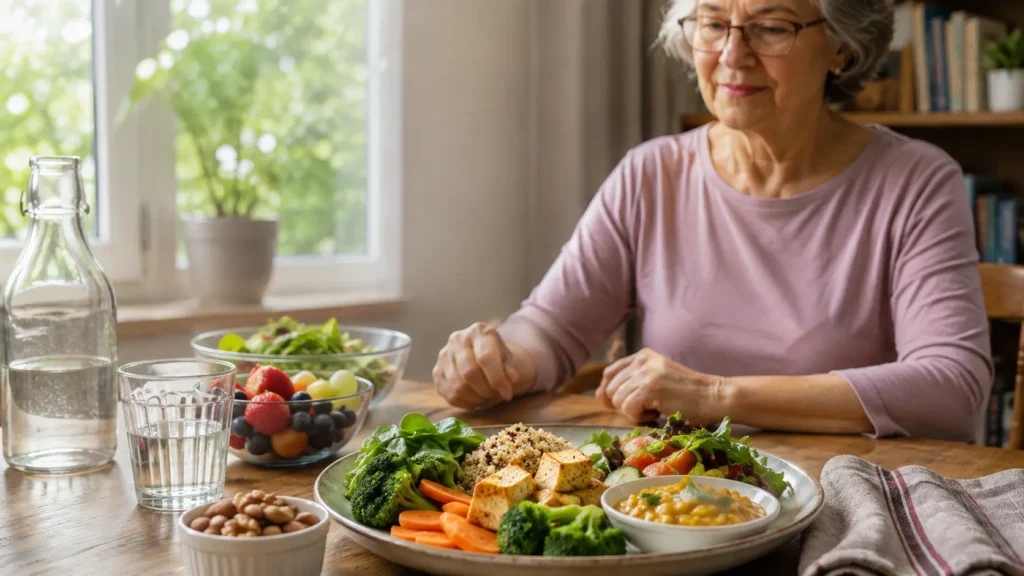
Pillar 2 — Nutrition for Healthy Aging
Food is more than fuel as we grow older.
The meals we eat influence our energy levels, strength, mobility, brain health, immune function, and overall quality of life. While there is no single “healthy aging diet,” consistent nourishing habits can help support wellbeing at every stage of later life.
Healthy aging nutrition is not about strict rules, counting every calorie, or following the latest food trend. It is about giving your body the nutrients it needs to stay strong, active, and resilient for years to come.
How Nutrition Supports Healthy Aging
As we age, our nutritional needs change.
The body becomes less efficient at preserving muscle mass, recovering from illness, absorbing certain nutrients, and maintaining hydration. At the same time, appetite may decrease even though the body still requires high-quality nutrition.
Good nutrition helps support:
- Muscle strength and mobility
- Bone health
- Heart health
- Brain function and memory
- Immune system function
- Energy levels
- Healthy weight management
- Overall wellbeing
Nutrition also works together with movement and exercise. The food we eat helps provide the building blocks needed to maintain strength, recover from activity, and support healthy aging over time.
Healthy Eating Patterns
The healthiest eating patterns are usually the ones people can maintain consistently.
Rather than focusing on individual foods, healthy aging often benefits from an overall pattern that emphasizes:
- Vegetables and fruits
- Whole grains
- Beans and legumes
- Nuts and seeds
- Quality protein sources
- Healthy fats
- Minimally processed foods
Protein deserves special attention during healthy aging because it helps preserve muscle mass and supports recovery. Many older adults benefit from including a source of protein with each meal.
Examples include:
- Lentils
- Beans
- Dairy products
- Paneer
- Yogurt
- Tofu
- Soy products
- Fish, poultry, or eggs for those who consume them
A balanced eating pattern does not require perfection. Small, consistent improvements often have a greater long-term impact than short periods of restrictive dieting.
Hydration and Aging
Hydration becomes increasingly important with age.
Many older adults naturally experience a reduced sense of thirst, making dehydration more common than many people realize.
Even mild dehydration can affect:
- Energy levels
- Concentration
- Mood
- Physical performance
- Balance
- Overall wellbeing
Staying hydrated does not mean drinking excessive amounts of water. It means regularly consuming fluids throughout the day.
Helpful hydration sources include:
- Water
- Herbal teas
- Milk
- Soups
- Fruits with high water content
- Vegetables with high water content
A simple habit such as keeping a water bottle nearby can make it easier to maintain healthy hydration throughout the day.
Building Sustainable Habits
Healthy aging is shaped more by daily habits than occasional healthy choices.
Many people believe they need a complete lifestyle overhaul to improve their nutrition. In reality, lasting change usually comes from small, manageable actions repeated consistently.
Examples include:
- Adding one extra serving of vegetables each day
- Including protein with every meal
- Drinking water regularly throughout the day
- Preparing more meals at home
- Eating mindfully and without rushing
- Choosing whole foods more often
These habits may seem simple, but over months and years they can significantly influence health, energy, and quality of life.
Healthy aging nutrition is not about eating perfectly. It is about creating a way of eating that nourishes the body, supports independence, and helps you continue enjoying the activities and people that matter most.
Pillar 3 — Sleep and Recovery
Many people accept poor sleep as an unavoidable part of growing older.
But while sleep patterns may change with age, quality sleep remains one of the most important foundations of healthy aging.
Sleep is when the body and brain perform essential maintenance. It supports memory, emotional wellbeing, immune function, physical recovery, and overall health. Without adequate rest, even the healthiest diet and exercise routine become harder to sustain.
Healthy aging is not only about what you do during the day. It is also about how well you recover at night.

Why Sleep Matters for Healthy Aging
Sleep affects nearly every system in the body.
During sleep, the brain processes information, forms memories, regulates emotions, and removes waste products that accumulate throughout the day. The body repairs tissues, supports immune function, and restores energy for the next day.
Research shows that good sleep is associated with:
- Better memory and cognitive function
- Improved mood and emotional resilience
- Stronger immune function
- Better balance and mobility
- Lower risk of falls
- Improved cardiovascular health
- Greater overall wellbeing
For older adults, quality sleep can also influence independence and quality of life. Feeling rested often makes it easier to stay active, maintain social connections, and participate in meaningful daily activities.
Sleep Changes With Age
Many older adults notice that their sleep changes over time.
They may:
- Fall asleep earlier
- Wake up earlier in the morning
- Experience lighter sleep
- Wake more frequently during the night
- Feel less refreshed after sleeping
These changes are common and are partly influenced by shifts in the body’s internal clock, known as the circadian rhythm.
However, frequent sleep problems should not automatically be dismissed as “just getting older.”
Poor sleep may be influenced by:
- Stress or anxiety
- Physical discomfort
- Certain medications
- Lack of physical activity
- Irregular sleep schedules
- Medical conditions that affect sleep
Understanding that sleep changes are common—but not inevitable—can help older adults take practical steps to improve sleep quality and recovery.
Evidence-Based Sleep Habits
Healthy sleep is often built through consistent daily habits rather than a single solution.
Research-supported habits that may improve sleep include:
Maintain a Consistent Sleep Schedule
Going to bed and waking up at similar times each day helps support the body’s natural sleep-wake cycle.
Consistency is often more important than sleeping at a specific hour.
Get Natural Light Exposure
Morning sunlight helps regulate circadian rhythms and supports healthy sleep patterns.
Spending time outdoors during daylight hours can help reinforce the body’s natural sleep signals.
Stay Physically Active
Regular movement and exercise are strongly associated with better sleep quality.
Activities such as walking, yoga, stretching, and strength training may help older adults fall asleep more easily and experience deeper sleep.
Create a Relaxing Evening Routine
A calm bedtime routine signals to the body that it is time to wind down.
Helpful activities may include:
- Reading
- Gentle stretching
- Breathing exercises
- Meditation
- Listening to calming music
Limit Stimulants Late in the Day
Caffeine and other stimulants may interfere with sleep for some individuals.
Many older adults find it helpful to reduce caffeine intake later in the afternoon and evening.
Keep the Sleep Environment Comfortable
A cool, quiet, and comfortable bedroom supports better sleep.
Simple adjustments such as reducing noise, limiting bright light, and maintaining a comfortable temperature can make a meaningful difference.
Manage Stress and Worry
Mental stress often follows people into bed.
Practices such as mindfulness, journaling, prayer, meditation, or relaxation exercises may help calm the mind before sleep.
Healthy aging requires recovery as much as activity. While nutrition fuels the body and movement keeps it strong, sleep provides the restoration needed to support both. Prioritizing quality sleep can help older adults maintain energy, resilience, independence, and wellbeing throughout the aging journey.
Pillar 4 — Brain Health
Growing older does not mean stopping growth.
One of the most encouraging findings in healthy aging research is that the brain remains capable of learning, adapting, and forming new connections throughout life. While some changes in memory and processing speed are a natural part of aging, maintaining brain health can help support independence, confidence, and quality of life for years to come.
Healthy aging is not only about protecting the body. It is also about nurturing the mind.

Healthy Aging and Cognitive Health
Cognitive health refers to the ability to think, learn, remember, reason, and make decisions.
These abilities influence nearly every aspect of daily life, including:
- Managing finances
- Following conversations
- Remembering appointments
- Learning new skills
- Solving problems
- Making informed decisions
Brain health is closely connected to overall health. Physical activity, sleep, nutrition, emotional wellbeing, and social engagement all play important roles in supporting cognitive function as we age.
Healthy aging does not require a perfect memory. Instead, it focuses on maintaining the mental abilities needed to live independently and enjoy life fully.
Mental Stimulation
Just like muscles become stronger when they are used, the brain benefits from regular mental activity.
Mental stimulation helps keep the brain engaged and challenged, encouraging the development of new neural connections.
Activities that provide mental stimulation include:
- Reading books and articles
- Solving puzzles and crosswords
- Playing strategy games
- Learning a new language
- Practicing music
- Writing or journaling
- Engaging in meaningful conversations
The best mental activities are often the ones that are enjoyable enough to become lifelong habits.
A curious and engaged mind tends to remain active for longer.
Lifelong Learning
Learning should not stop after school, college, or retirement.
In fact, lifelong learning is one of the most powerful healthy aging habits.
Learning something new challenges the brain to adapt, process information, and build new connections.
Lifelong learning can take many forms:
- Taking a class
- Learning technology skills
- Exploring a new hobby
- Studying history or philosophy
- Learning about health and wellness
- Developing creative skills
- Participating in workshops or community programs
The goal is not to become an expert in everything.
The goal is to remain curious and continue growing.
Many older adults discover that retirement provides the freedom to learn subjects they never had time to explore earlier in life.
Brain-Healthy Habits
Brain health is influenced by everyday habits more than occasional mental exercises.
Research suggests that several lifestyle factors work together to support cognitive health and healthy aging.
Stay Physically Active
Regular movement increases blood flow to the brain and supports overall cognitive function.
Walking, yoga, strength training, and other forms of exercise benefit both the body and the mind.
Prioritize Quality Sleep
Sleep plays a critical role in memory consolidation, learning, and brain recovery.
Consistently poor sleep may affect concentration, mood, and cognitive performance.
Maintain Social Connections
Meaningful social interaction challenges the brain in ways that puzzles alone cannot.
Conversations, friendships, volunteering, and community involvement all help keep the mind engaged.
Manage Stress
Chronic stress can affect memory, attention, and emotional wellbeing.
Practices such as mindfulness, meditation, prayer, breathing exercises, and spending time in nature may help support mental wellness.
Eat for Brain Health
A balanced diet rich in fruits, vegetables, healthy fats, whole grains, and protein provides nutrients that support healthy brain function.
Nutrition, movement, and sleep work together as part of a healthy aging lifestyle.
Stay Curious
Perhaps the simplest brain-healthy habit is curiosity.
People who continue asking questions, exploring new ideas, and seeking new experiences often remain mentally engaged throughout life.
Healthy aging is not about preventing every change that comes with age. It is about giving the brain the support it needs to remain active, adaptable, and resilient. By staying curious, continuing to learn, and maintaining healthy daily habits, older adults can support cognitive health and continue growing at every stage of life.
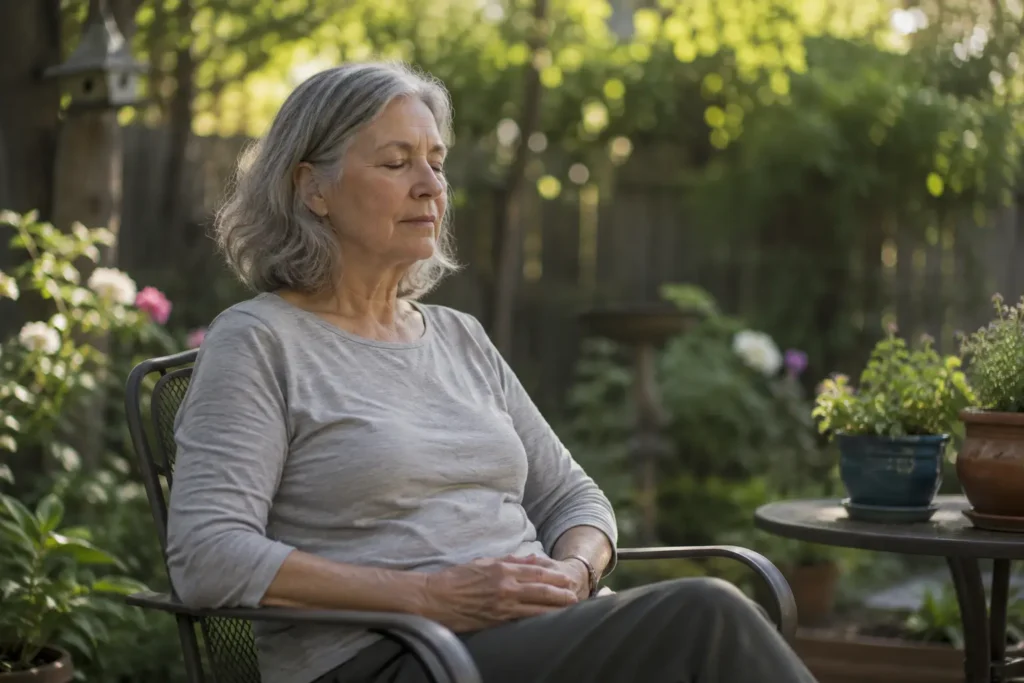
Pillar 5 — Emotional Wellbeing
Healthy aging is not only about caring for the body and mind.
It is also about caring for our emotional health.
As people grow older, life often brings significant changes. Retirement, health concerns, changing family roles, caregiving responsibilities, and the loss of loved ones can all affect emotional wellbeing. While these experiences are a natural part of life, how we respond to them can have a profound impact on our overall health and happiness.
Emotional wellbeing helps us navigate life’s challenges, maintain meaningful relationships, and continue finding joy and purpose in everyday experiences.
Managing Stress
Stress does not disappear with age.
In fact, many older adults face unique sources of stress that younger people may not fully understand.
Common stressors in later life include:
- Health concerns
- Financial worries
- Family responsibilities
- Caregiving duties
- Social isolation
- Major life transitions
- Grief and loss
A certain amount of stress is normal. However, long-term unmanaged stress can affect sleep, energy levels, concentration, immune function, and overall wellbeing.
Healthy aging includes developing healthy ways to manage stress, such as:
- Regular physical activity
- Spending time in nature
- Deep breathing exercises
- Meditation or prayer
- Talking with trusted friends or family
- Pursuing enjoyable hobbies
Managing stress is not about eliminating problems. It is about building the ability to respond to them in healthier ways.
Building Resilience
Resilience is the ability to adapt and recover when life becomes difficult.
Many older adults have already demonstrated remarkable resilience throughout their lives. They have navigated personal challenges, family responsibilities, career changes, and unexpected setbacks.
Healthy aging involves continuing to strengthen this resilience.
Resilient individuals often:
- Adapt more easily to change
- Maintain hope during difficult times
- Focus on what they can control
- Seek support when needed
- Learn from challenges
- Continue moving forward despite setbacks
Resilience does not mean never feeling sadness, frustration, or fear.
It means having the inner strength to work through those emotions and continue living meaningfully.
Mindfulness and Aging
Mindfulness is the practice of paying attention to the present moment with awareness and acceptance.
For many older adults, mindfulness can be a valuable tool for reducing stress and improving emotional wellbeing.
Mindfulness practices may include:
- Meditation
- Mindful breathing
- Yoga
- Prayer
- Gratitude practices
- Spending quiet time in nature
Research suggests that mindfulness may help support:
- Emotional balance
- Stress management
- Sleep quality
- Mental clarity
- Overall wellbeing
One of the greatest gifts of mindfulness is that it encourages people to fully experience the present rather than becoming overwhelmed by worries about the future or regrets about the past.
Emotional Health in Later Life
Emotional health is not the absence of difficult emotions.
Every person experiences sadness, disappointment, worry, and grief at times. Emotional wellbeing comes from recognizing these feelings, processing them in healthy ways, and maintaining meaningful connections with others.
Important aspects of emotional health in later life include:
- Maintaining supportive relationships
- Expressing emotions openly
- Seeking help when needed
- Staying socially connected
- Practicing self-compassion
- Finding purpose and meaning
- Continuing to engage in enjoyable activities
Many people discover that later life offers opportunities for personal growth, wisdom, reflection, and deeper appreciation for what truly matters.
Healthy aging is not about avoiding life’s challenges. It is about developing the emotional strength, resilience, and self-awareness needed to navigate those challenges with grace. By caring for emotional wellbeing, older adults can support not only their mental health but also their physical health, relationships, and overall quality of life.
Pillar 6 — Social Connection
One of the most surprising discoveries in healthy aging research is that strong relationships can be just as important as exercise, nutrition, and sleep.
Humans are social beings. We are wired for connection, belonging, and meaningful relationships. Throughout life, our interactions with family, friends, neighbors, and communities help shape our wellbeing.
Healthy aging is not meant to be a journey taken alone.
People who maintain meaningful social connections often experience better physical health, greater emotional wellbeing, and a higher quality of life as they age.
Why Relationships Influence Healthy Aging
Relationships provide far more than companionship.
Supportive social connections can influence how we think, feel, and even how our bodies function.
Research has linked strong social relationships to:
- Better emotional wellbeing
- Lower stress levels
- Improved cognitive health
- Greater resilience during difficult times
- Higher levels of physical activity
- Better recovery from illness
- Increased life satisfaction
When people feel connected, they often feel more motivated to care for their health, stay active, and remain engaged in life.
Relationships also provide practical support during life’s challenges, whether that means receiving encouragement, sharing experiences, or simply having someone who listens.
Healthy aging is strengthened by feeling seen, valued, and connected to others.
Loneliness and Aging
While many older adults enjoy strong social networks, others may experience increasing loneliness as life circumstances change.
Retirement, relocation, health limitations, reduced mobility, and the loss of friends or loved ones can sometimes lead to social isolation.
Loneliness is more than being physically alone.
A person can be surrounded by people and still feel disconnected.
Long-term loneliness has been associated with:
- Increased stress
- Poorer mental wellbeing
- Reduced quality of life
- Lower physical activity levels
- Increased risk of depression
- Declines in overall health
Recognizing loneliness is an important step toward addressing it.
Wanting company, support, or someone to talk to doesn’t make you weak. We all need people. It is a natural human need that remains important at every age.
Building Supportive Communities
Healthy aging thrives in supportive communities.
Community can take many forms and looks different for every person.
Meaningful connections may come from:
- Family relationships
- Friendships
- Volunteer work
- Faith communities
- Hobby groups
- Exercise classes
- Senior centers
- Educational programs
- Neighborhood gatherings
- Online communities with shared interests
Building community does not require having a large social circle.
Often, a few meaningful and supportive relationships are enough to create a strong sense of belonging.
Simple actions can help strengthen social connections:
- Reaching out to a friend
- Joining a local group or class
- Volunteering
- Attending community events
- Participating in shared activities
- Making time for regular conversations
The goal is not constant social activity.
The goal is meaningful connection.
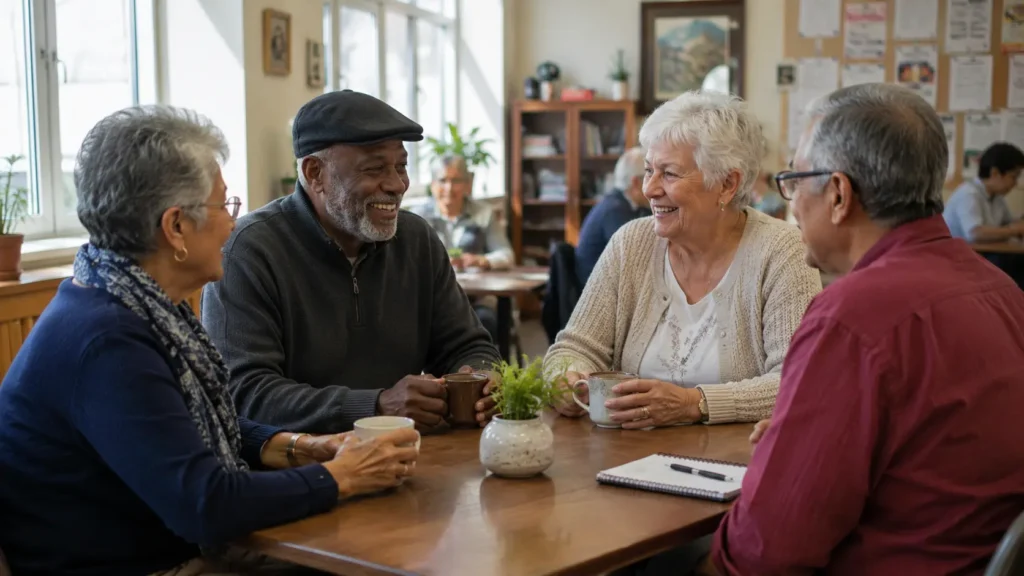
Healthy aging is about more than living longer. It is about continuing to share life with others, giving and receiving support, and maintaining a sense of belonging. Strong relationships and supportive communities help create resilience, joy, and purpose throughout the aging journey.
Pillar 7 — Purpose and Meaning
Healthy aging is not only about adding years to life.
It is also about adding meaning to those years.
Many people spend decades focused on work, raising families, meeting responsibilities, and supporting others. As life changes, especially after retirement or major transitions, an important question often emerges:
What gives my life meaning now?
Research consistently shows that a strong sense of purpose is associated with better physical health, emotional wellbeing, resilience, and overall life satisfaction. Purpose provides a reason to get up in the morning, stay engaged, and continue growing regardless of age.
Healthy aging is not simply about avoiding disease. It is about continuing to live a life that feels worthwhile.
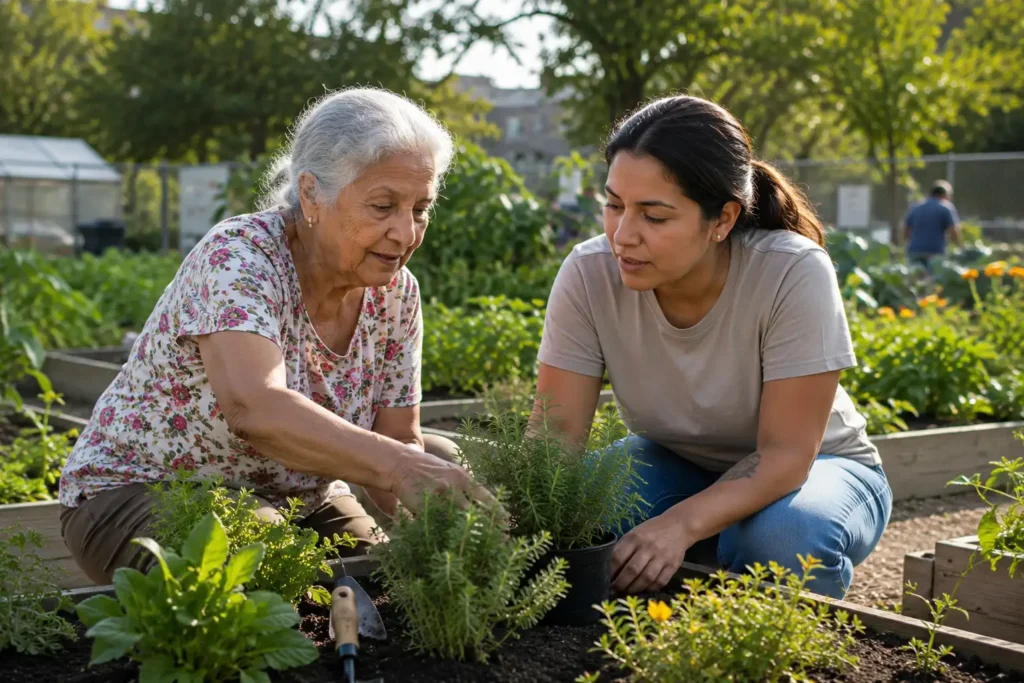
Purpose as a Predictor of Wellbeing
Purpose is one of the strongest yet often overlooked predictors of healthy aging.
People who feel their lives have meaning often:
- Maintain healthier habits
- Stay physically active
- Remain socially engaged
- Cope better with challenges
- Experience greater life satisfaction
- Report higher levels of wellbeing
Purpose doesn’t have to mean achieving something extraordinary. Sometimes it is simply having something that matters to you.
For some people, purpose comes from caring for family. For others, it comes from volunteering, creating art, mentoring younger generations, learning new skills, serving their community, practicing their faith, or simply helping others in everyday ways.
What matters is having something that feels meaningful and personally important.
Purpose gives direction to healthy aging and helps transform later life from a period of decline into a period of continued contribution and growth.
Retirement and Identity
Retirement is one of the most significant transitions many people experience.
For decades, work may have provided structure, social connection, financial security, and a sense of identity. When that chapter ends, some people feel freedom and excitement, while others may feel uncertain or lost.
This is completely normal.
Many older adults discover that retirement is not merely the end of a career. It is the beginning of a new stage of life.
Healthy aging often involves redefining identity beyond a job title.
Questions that can help guide this transition include:
- What activities bring me joy?
- What skills or experiences can I share with others?
- What have I always wanted to learn?
- How would I like to contribute to my family or community?
- What matters most to me now?
Retirement can create space for new passions, deeper relationships, personal growth, and meaningful contributions that may not have been possible earlier in life.
Meaningful Aging
Meaningful aging is the practice of continuing to grow, contribute, and engage with life regardless of age.
It recognizes that older adulthood is not simply a period of loss. It can also be a time of wisdom, reflection, purpose, and fulfillment.
Meaningful aging often includes:
- Maintaining meaningful relationships
- Sharing knowledge and life experience
- Helping others
- Pursuing personal interests
- Continuing to learn and grow
- Participating in community life
- Practicing gratitude
- Living according to personal values
You don’t need to keep yourself occupied from morning to night for your life to feel meaningful.
The goal is to stay connected to what gives life meaning.
Some of the happiest older adults are not necessarily the healthiest, wealthiest, or most productive. They are often the people who continue to feel connected to something larger than themselves—whether that is family, community, faith, service, creativity, or personal growth.
Healthy aging is ultimately about living well, not simply living longer. Purpose and meaning provide the foundation that helps transform additional years into fulfilling years, allowing people to continue growing, contributing, and finding joy throughout every stage of life.
Healthy Aging by Decade
Healthy aging is not a destination that begins at a certain age.
It is a lifelong process that evolves over time.
The priorities that support healthy aging in your 50s may look different from those in your 70s or 80s. While the core pillars remain the same—movement, nutrition, sleep, brain health, emotional wellbeing, social connection, and purpose—the way they are applied often changes with age.
The goal at every stage is not to fight aging. It is to adapt, thrive, and maintain the highest possible quality of life.
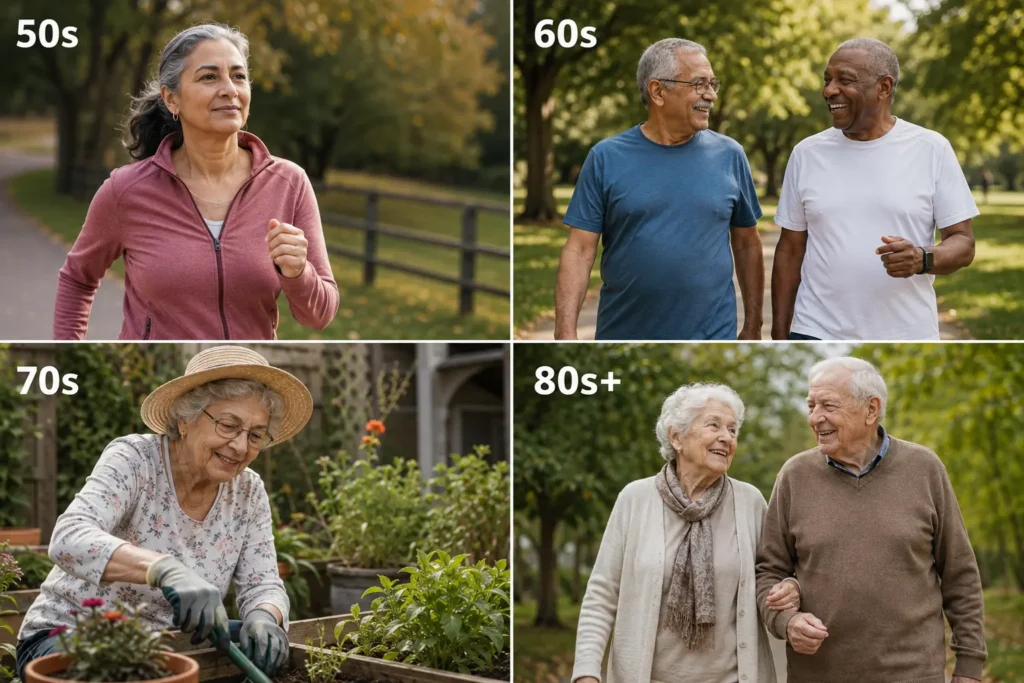
Healthy Aging in Your 50s
Your 50s are often the decade when healthy aging becomes more intentional.
Many people are still active professionally and socially, but they may begin noticing changes in energy levels, recovery time, muscle mass, flexibility, or overall health.
This is an important decade for building habits that will influence health for years to come.
Key priorities include:
- Maintaining muscle strength
- Staying physically active
- Prioritizing sleep
- Managing stress
- Supporting heart and metabolic health
- Building healthy eating habits
- Staying socially connected
- Scheduling preventive health screenings
The choices made during this decade can have a significant impact on future healthspan and independence.
Healthy Aging in Your 60s
For many people, their 60s bring major life transitions, including retirement, changing family roles, or new lifestyle opportunities.
This decade often creates more time to focus on personal wellbeing and healthy aging habits.
Important areas of focus include:
- Preserving strength and balance
- Preventing falls
- Staying mentally engaged
- Maintaining social connections
- Continuing lifelong learning
- Finding purpose beyond career identity
- Managing chronic health conditions proactively
- Protecting mobility and independence
Many adults in their 60s remain highly active and discover new interests, hobbies, and opportunities for growth.
Healthy aging during this stage is often about maintaining function while embracing new possibilities.
Healthy Aging in Your 70s
The focus in your 70s often shifts toward maintaining independence, mobility, and quality of life.
Small daily habits become increasingly important.
Priorities commonly include:
- Regular physical activity
- Strength and balance training
- Adequate protein intake
- Staying hydrated
- Protecting cognitive health
- Maintaining social engagement
- Managing medications appropriately
- Creating safe home environments
This decade is not about slowing down completely.
Many people in their 70s continue traveling, volunteering, exercising, learning, and contributing to their communities.
Healthy aging in your 70s is about continuing to participate in life while adapting to changing needs.
Healthy Aging in Your 80s and Beyond
Healthy aging in your 80s and beyond focuses on maintaining dignity, independence, comfort, and meaningful engagement with life.
The goal is not perfection.
The goal is preserving the highest possible level of function and wellbeing.
Important priorities often include:
- Maintaining mobility as much as possible
- Preventing falls and injuries
- Preserving muscle strength
- Staying socially connected
- Supporting cognitive health
- Managing health conditions effectively
- Continuing meaningful activities
- Maintaining a sense of purpose
Even small actions can have a powerful impact.
A daily walk, regular conversations with loved ones, participation in community activities, gentle exercise, or pursuing a favorite hobby can all contribute to healthy aging.
The later decades of life are often rich with experience, wisdom, perspective, and resilience. Healthy aging recognizes that growth, contribution, learning, and meaning remain possible at every age.
Ultimately, healthy aging is not defined by a specific number of years. It is defined by the ability to continue living with purpose, connection, and the greatest possible quality of life throughout every stage of the aging journey.
10 Evidence-Based Healthy Aging Tips
Healthy aging is not built through one perfect diet, one exercise program, or one medical treatment.
It is the result of small daily choices repeated consistently over time.
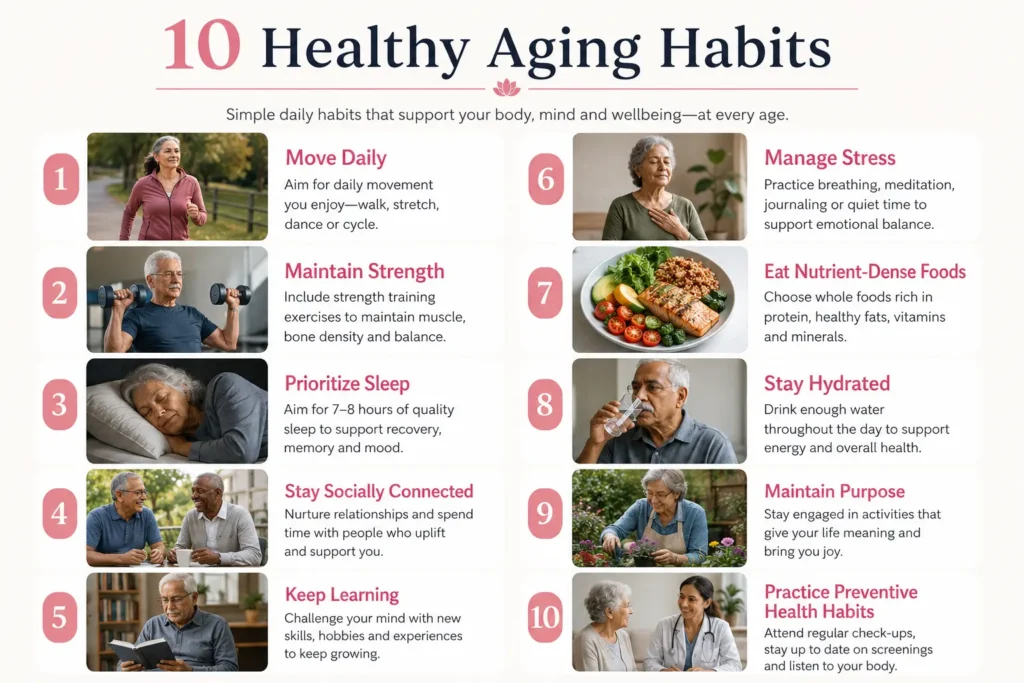
The good news is that many of the habits that support healthy aging are simple, accessible, and backed by decades of research. These habits can help protect physical health, support cognitive function, maintain independence, and improve overall quality of life.
1. Move Daily
The human body is designed to move.
Regular movement helps maintain mobility, improve circulation, support brain health, and reduce the risk of many age-related health conditions.
Movement does not need to be intense to be beneficial.
Walking, gardening, stretching, chair yoga, dancing, and household activities all contribute to healthy aging.
The most effective exercise is often the one you enjoy enough to do consistently.
2. Maintain Strength
Muscle strength naturally declines with age if it is not maintained.
Strength is essential for:
- Independence
- Balance
- Mobility
- Fall prevention
- Everyday activities
Simple strength-building activities performed regularly can help preserve function and confidence throughout later life.
Healthy aging is not only about living longer. It is also about remaining capable and independent.
3. Prioritize Sleep
Sleep is one of the body’s most important recovery processes.
Quality sleep supports:
- Memory
- Immune function
- Emotional wellbeing
- Physical recovery
- Cognitive health
While sleep patterns may change with age, healthy sleep habits remain essential for healthy aging and overall wellbeing.
4. Stay Socially Connected
Strong relationships are a powerful predictor of healthy aging.
Meaningful social connections can support emotional health, resilience, cognitive function, and life satisfaction.
Make time for:
- Family
- Friends
- Community groups
- Volunteer activities
- Shared interests
Connection helps people feel supported, valued, and engaged throughout life.
5. Keep Learning
The brain benefits from continuous stimulation.
Learning new skills, exploring new interests, reading, taking classes, and challenging yourself mentally can help support cognitive health as you age.
Healthy aging involves remaining curious and engaged with the world around you.
Growth does not stop at retirement.
6. Manage Stress
Long-term stress can affect both physical and emotional health.
Healthy stress management may include:
- Meditation
- Mindfulness
- Prayer
- Deep breathing
- Physical activity
- Time in nature
- Meaningful social interaction
Managing stress helps support emotional wellbeing and improves overall quality of life.
7. Eat Nutrient-Dense Foods
Nutrition plays a central role in healthy aging.
A balanced eating pattern that emphasizes:
- Vegetables
- Fruits
- Whole grains
- Healthy fats
- Quality protein sources
can help support strength, energy, brain health, and overall wellbeing.
Rather than focusing on restriction, focus on nourishment.
8. Stay Hydrated
Hydration becomes increasingly important with age.
Even mild dehydration can affect:
- Energy
- Concentration
- Mood
- Physical performance
Make hydration a daily habit by regularly drinking water and consuming foods with high water content.
Small habits often prevent larger problems.
9. Maintain Purpose
People who feel their lives have meaning often report higher levels of wellbeing and life satisfaction.
Purpose can come from:
- Family
- Volunteering
- Faith
- Hobbies
- Creativity
- Helping others
- Lifelong learning
Purpose gives direction to healthy aging and helps transform additional years into meaningful years.
10. Practice Preventive Health Habits
Healthy aging is easier when problems are identified early.
Preventive health habits may include:
- Regular medical checkups
- Recommended health screenings
- Vision and hearing evaluations
- Vaccinations when appropriate
- Monitoring chronic conditions
- Following medical advice
Prevention helps protect independence and supports long-term health.
The Bottom Line
Healthy aging is not achieved through one dramatic change.
It is built through daily habits that support physical health, cognitive function, emotional wellbeing, social connection, and purpose. The earlier these habits begin, the greater their impact, but it is never too late to start.
Every positive choice—whether it is taking a walk, calling a friend, eating a nourishing meal, or learning something new—contributes to a healthier, more fulfilling aging journey.
Common Myths About Healthy Aging
Many beliefs about aging are based on outdated assumptions rather than scientific evidence.
These myths can discourage people from making positive changes and may lead them to accept limitations that are not actually inevitable. Modern healthy aging research paints a far more hopeful picture.
While aging brings natural changes, growing older does not automatically mean becoming frail, inactive, or disconnected from life.
Understanding the facts can help people make better decisions and approach later life with greater confidence.
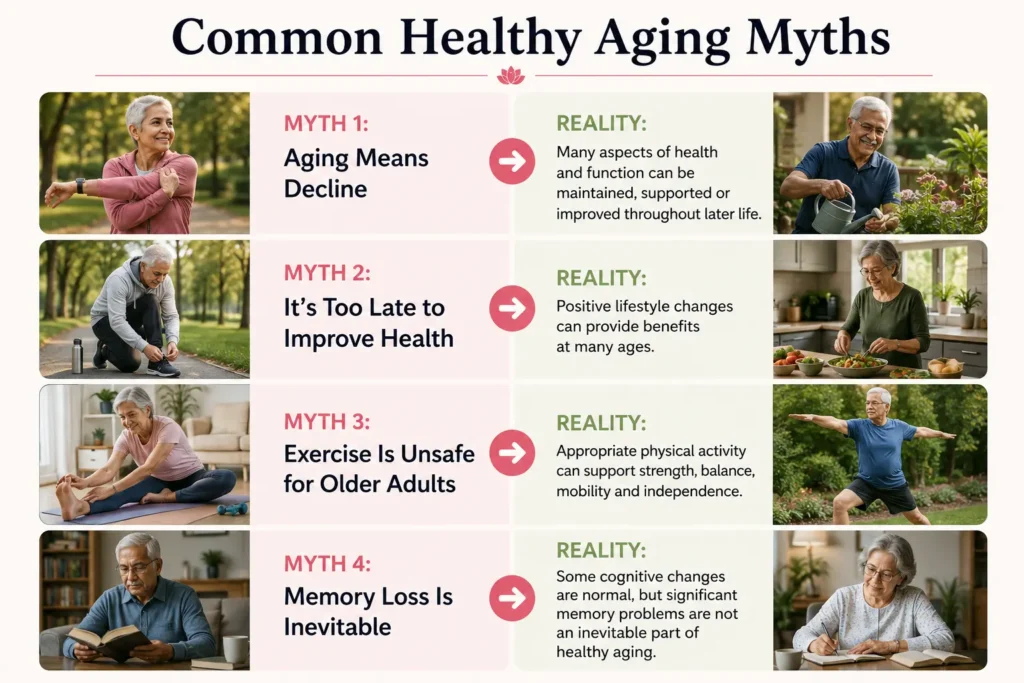
Myth 1: Aging Means Decline
One of the most common misconceptions is that aging is simply a slow and unavoidable decline.
The reality is far more complex.
While certain physical changes occur naturally with age, many aspects of health can be maintained, improved, or supported through healthy habits.
People continue to:
- Build strength
- Improve balance
- Learn new skills
- Form meaningful relationships
- Develop new interests
- Contribute to their communities
Healthy aging is not about avoiding every change that comes with age. It is about maintaining function, independence, and quality of life for as long as possible.
Many older adults remain active, engaged, and productive well into their later years.
Myth 2: It’s Too Late to Improve Health
Many people believe that healthy habits only matter when started early in life.
Research consistently shows otherwise.
Positive lifestyle changes can provide benefits at almost any age.
Studies have found improvements in health and wellbeing when older adults begin:
- Exercising regularly
- Strength training
- Improving nutrition
- Quitting smoking
- Managing stress
- Becoming more socially active
- Prioritizing sleep
The body and brain retain an impressive ability to adapt throughout life.
Healthy aging is not about what you did in the past. It is about the choices you make today.
Myth 3: Exercise Is Unsafe for Older Adults
Some older adults avoid exercise because they worry it may be dangerous or inappropriate for their age.
In reality, appropriate physical activity is one of the most effective tools for healthy aging.
Regular exercise can help support:
- Strength
- Balance
- Mobility
- Bone health
- Brain health
- Emotional wellbeing
- Independence
The key is choosing activities that match individual abilities and health needs.
For many older adults, safe options include:
- Walking
- Chair yoga
- Strength training
- Balance exercises
- Stretching
- Swimming
- Physiotherapy-guided movement
Inactivity often poses a greater risk than properly performed exercise.
Myth 4: Memory Loss Is Inevitable
Many people assume that significant memory decline is an unavoidable part of growing older.
While certain cognitive changes may occur with age, severe memory problems are not considered a normal part of healthy aging.
The brain remains adaptable throughout life.
Factors that help support cognitive health include:
- Physical activity
- Quality sleep
- Social engagement
- Lifelong learning
- Mental stimulation
- Stress management
- Healthy nutrition
Occasionally forgetting a name or misplacing keys can happen at any age.
Healthy aging focuses on supporting brain health so that people can continue learning, thinking, and engaging with the world around them.
The Truth About Healthy Aging
Perhaps the biggest myth of all is that aging is something that simply happens to us.
In reality, many aspects of healthy aging are influenced by daily habits, relationships, environment, mindset, and lifestyle choices.
We cannot control every aspect of aging, but we can influence how we experience it.
Healthy aging is not about staying young forever. It is about maintaining the highest possible level of physical health, cognitive function, emotional wellbeing, social connection, and purpose throughout life’s later years.
Healthy Aging Resources
One of the best things about healthy aging is that you do not have to figure it out alone.
Today, there are excellent evidence-based resources, organizations, programs, and educational materials designed to help older adults stay healthy, independent, and engaged throughout life. Whether you want practical advice, scientific information, exercise guidance, or community support, reliable resources can help you make informed decisions about your health and wellbeing.
Healthy Aging Articles
Educational articles can help older adults better understand the many factors that influence healthy aging.
Topics worth exploring include:
- Nutrition and aging
- Healthy aging exercises
- Brain health and memory
- Sleep and aging
- Fall prevention
- Longevity and healthspan
- Emotional wellbeing
- Social connection
- Preventive healthcare
- Aging in place
When reading online, prioritize resources from trusted organizations, healthcare institutions, universities, government agencies, and established healthy aging programs.
Reliable information can help separate evidence-based guidance from misinformation.
Healthy Aging PDF Resources
Many organizations provide free healthy aging PDF resources that can be downloaded, saved, and shared.
These resources often include:
- Healthy aging checklists
- Physical activity guides
- Fall-prevention handouts
- Nutrition recommendations
- Caregiver resources
- Healthy aging frameworks
- Community resource directories
PDF guides can be especially useful for older adults who prefer printable materials or want information that can be referenced offline.
Healthy Aging Programs
Healthy aging programs provide structured support for maintaining health, mobility, independence, and wellbeing.
Examples include:
- Exercise and fitness programs
- Chair yoga classes
- Balance and fall-prevention programs
- Community wellness initiatives
- Senior learning programs
- Social engagement groups
- Volunteer opportunities
- Healthy lifestyle workshops
The most effective programs often combine physical activity, education, social connection, and ongoing support.
Participation in healthy aging programs can help older adults remain active while building meaningful relationships within their communities.
WHO Resources
The World Health Organization (WHO) has become one of the leading global authorities on healthy aging.
Its work emphasizes that healthy aging is not simply the absence of disease. Instead, healthy aging focuses on maintaining functional ability—the ability to do the things that people value throughout life.
Important WHO healthy aging resources include:
- The Healthy Ageing Framework
- Functional Ability Model
- Intrinsic Capacity Framework
- Decade of Healthy Ageing (2021–2030)
- Age-Friendly Communities initiatives
- Global healthy aging research and reports
These resources have helped shift global conversations from simply increasing lifespan to improving healthspan and quality of life.
Further Reading
Healthy aging is a broad and evolving field. As research continues to grow, there are many opportunities to deepen your understanding.
Topics worth exploring further include:
- Healthy aging after 50
- Healthy aging after 60
- Healthy aging after 70
- Healthy aging after 80
- Longevity science
- Healthy aging nutrition
- Brain health and cognitive aging
- Sleep and healthy aging
- Healthy aging and exercise
- Preventive healthcare
- Functional fitness
- Emotional wellbeing and resilience
- Social connection and aging
- Purpose and meaning in later life
The most important thing to remember is that healthy aging is a journey, not a destination. Every step toward better movement, nutrition, sleep, connection, learning, and purpose contributes to a healthier and more fulfilling life.
The goal is not merely to live longer. The goal is to live well.
Also Read: Chair Yoga for Seniors: Benefits, Exercises, Programs & Free Resources
Also Read: Normal Aging vs Dementia: Key Differences, Early Signs & What’s Normal
Also Read: 5 Simple Erector Spinae Exercises to Relieve Lower Back Pain at Home
Also Read: Can’t Straighten Your Elbow? It Might Be Hyperextended, Here’s What to Do
Also Read: 9 Benefits of Playing Puzzles for Older Adults: Brain, Memory & Mental Health