
Table of Contents
Many people reach a point in life where movement no longer feels simple or supportive. You may still want to stay active, but fear quietly steps in: fear of falling, fear of pain, or fear of not being able to move the way you once could. Over time, this fear can lead to stiffness, reduced balance, and a growing loss of confidence in your own body. That’s where chair yoga for seniors gently steps in to solve the problem.
So, what is chair yoga?
Chair yoga is a gradual, evidence-informed form of yoga designed to be practiced while sitting on a sturdy chair or using it for support. It was created to make movements joint-friendly and more accessible. Chair yoga for seniors at home is especially helpful for anyone who finds standing or floor-based exercise difficult due to age, joint pain, or balance concerns, and it often feels like a blessing for beginners.
Unlike traditional yoga, chair yoga does not require you to get down on the floor or hold challenging poses. Instead, it focuses on slow, controlled movements, light stretching, and relaxed breathing, all while you remain seated or supported. This makes it one of the safest yoga options for older adults and a form of gentle chair yoga for seniors, helping reduce the risk of falls while still allowing the body to move, stretch, and stay active.
These controlled movements support circulation, joint health, and muscle strength. Over time, they can help reduce stiffness and make everyday activities such as standing and walking feel easier and more stable, especially when practicing simple chair yoga exercises for seniors consistently.
This type of yoga is not about flexibility or athletic performance. It is about safety, comfort, and restoring confidence in your own body through small, steady movements that respect your body’s limits, making it ideal as chair yoga for beginners at home.
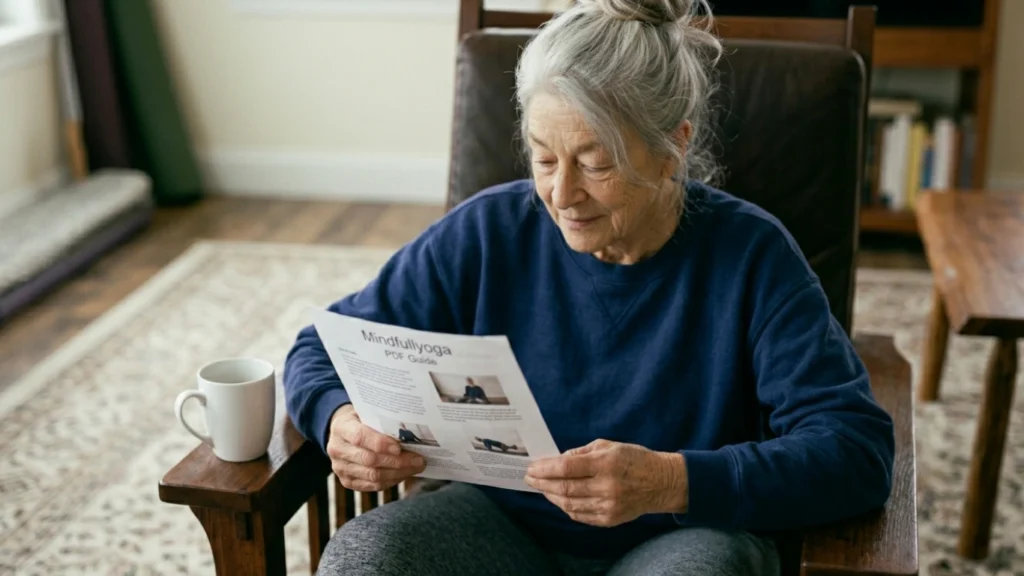
To make this practice simple and practical, we provide a free printable chair yoga routine PDF that you can keep beside your chair. It allows you to follow the routine at your own pace without needing a phone, tablet, or computer.
If traditional exercise feels intimidating or unsupportive to you, chair yoga offers a kinder, safer way for you.
How This Guide Was Prepared
We curated this guide using principles of senior fitness, fall prevention, and age-appropriate movement for you.
It reflects how the body changes with age, including reduced balance, joint stiffness, and muscle loss, and focuses on helping older adults move in a way that supports their stability, comfort, and independence.
“If you have a medical condition, recent surgery, or a balance disorder, consult your healthcare provider before starting a new exercise routine.”
What Is Chair Yoga?
Chair Yoga Definition
So, can you do yoga on a chair? The answer is yes, you can. Chair yoga for seniors allows you to perform many traditional yoga movements while staying supported on a chair, which can help reduce fall risk and make movement feel more stable.
You might be wondering what chair yoga for beginners at home is like. It is a body-friendly practice that uses controlled movements, proper posture, and relaxed breathing to support range of motion, circulation, and overall stability without putting unnecessary strain on your body.
Chair yoga is a modified form of yoga performed while sitting on a chair or using a chair for support. Its purpose is to make yoga more accessible and adaptable for people who find floor-based exercise difficult, especially older adults. This makes gentle chair yoga for seniors a practical option for those with balance concerns, joint stiffness, or limited mobility.
What Happens to the Body After 60
As we age and our bodies grow older, movements and balance may start to feel more stiff and rigid. It doesn’t mean something is wrong with your body; it is a natural part of aging and a sign that you may need to take more mindful care of your body.
Common changes that come with age:
Stiffer joints—cartilage may become thinner over time, which can move feel slower or less comfortable
Weaker muscles—especially in the legs, hips, and core, which may affect overall stability and balance
Slower reaction time—reflexes may slow down with age, making it harder to respond quickly to a slip or misstep
Reduced balance confidence—many seniors move less because they feel unsure or worried about falling
5 Core Benefits of Chair Yoga for Seniors
Moving your body shouldn’t feel forced or overwhelming, and chair yoga for seniors at home offers a gentle and supportive way to stay active. When practiced regularly, gentle chair yoga for seniors may support:
Joint comfort & mobility
Gentle, supported movements in chair yoga exercises for seniors keep the hips, knees, shoulders, and spine moving, which may help reduce stiffness and make everyday tasks like standing feel more comfortable.
Better balance and stability
Slow, controlled movements help the body stay centered and steady, supporting overall balance in a safe and supported way.
Stronger support muscles
Simple chair yoga exercises for seniors engage the legs, hips, back, and core muscles that support sitting, standing, and daily movement over time.
Improved circulation
Light muscle activity during chair yoga for beginners at home helps support blood flow through the legs and arms.
Greater confidence in daily movement
Feeling more stable while moving may help reduce fear of falling and support confidence in everyday activities.
How Chair Yoga Differs From Traditional Yoga
Chair yoga and Hatha or Vinyasa yoga (traditional yoga) share many similarities, especially in their core purpose of supporting movement, breathing, and overall well-being.
Where traditional yoga is often suited for a full-body workout, improved mobility, and floor-based transitions, chair yoga for seniors focuses on smaller, joint-friendly movements with little to no floor transition. It provides stability and support through the chair, which may help reduce the risk of falls.
Gentle chair yoga for seniors is designed for older adults and for people with a limited range of motion who may find it difficult to move freely or safely in traditional yoga settings.
Comparison at a Glance
| Feature | Traditional Yoga | Chair Yoga |
|---|---|---|
| Foundation | The floor / yoga mat | A stable, high-seated chair |
| Balance | Relies on internal stability | Relies on external support |
| Joint Load | Higher load (wrists, knees, ankles) | Lower load (seated or supported) |
| Accessibility | Requires floor-to-standing mobility | More accessible for different mobility levels |
| Pace | Often rhythmic or flowing | Generally slow and controlled |
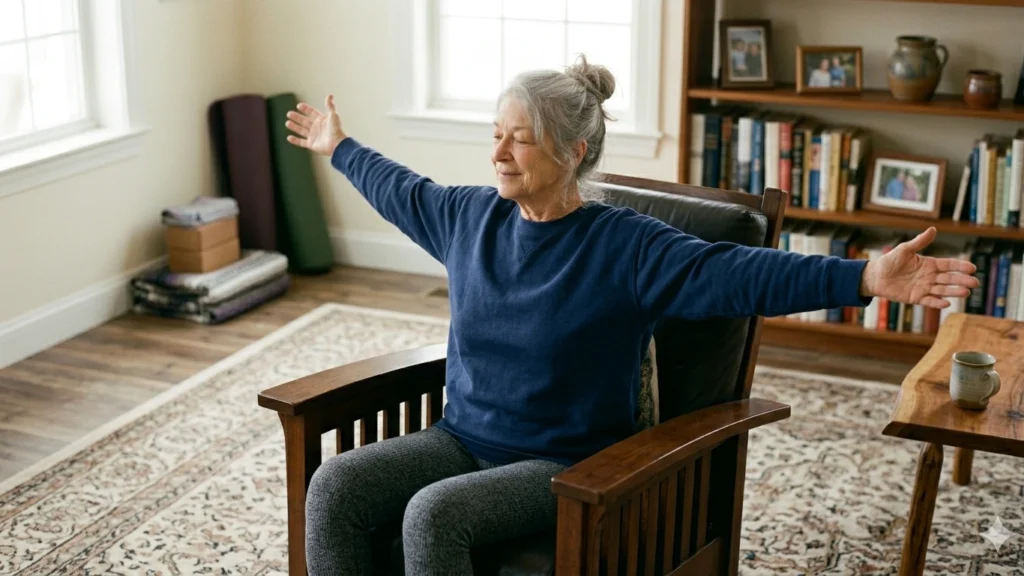
Chair yoga offers many of the supportive aspects of yoga, such as flexibility, relaxation, and mindful movement, in a way that feels more practical and accessible for seniors and beginners. Chair yoga for beginners at home focuses on comfort, stability, and ease of movement rather than athletic performance or advanced poses.
Who Is Chair Yoga Designed For?
Chair yoga for seniors and beginners is designed to make movement more accessible and supportive. It is commonly practiced by older adults, beginners, returning exercisers, and individuals who may experience joint stiffness, limited mobility, or balance concerns.
Chair Yoga for Seniors
Chair yoga is especially suitable for older adults, as it removes the need to get down on the floor. This makes it more approachable for those who may feel hesitant or uncomfortable with traditional yoga.
It may be a supportive option for seniors who:
- Are 60 years or older
- Experience joint stiffness or reduced mobility
- Feel unsteady while standing or have concerns about balance
- Prefer gentle chair yoga for seniors at home
By offering a stable, seated position, chair yoga helps create a more comfortable and confidence-building environment for movement.
Beginners & Returning Exercisers
Chair yoga for beginners at home can act as a low-impact starting point for those who are new to exercise or returning after a break.
It provides a less intimidating way to begin moving your body again, especially if traditional workouts feel overwhelming.
Chair yoga supports gradual progress by:
- Allowing you to start from a stable seated position
- Requiring no special equipment, just a sturdy chair
- Helping you move at your own pace without pressure
- Offering a structured way to rebuild consistency and confidence
For many people, it serves as a gentle re-entry into regular movement without the need for intense routines.
45-Minute Chair Yoga Sequence for Seniors and Beginners
Let’s see how simple chair yoga exercises for seniors support a safe and practical routine:
- Beginner-friendly setup: You start from a position of stability (sitting)
- Minimal equipment: Only a stable chair is needed
- Built-in support: The chair acts as a natural limit, helping reduce overstretching or unsafe movement
To make your routine easier to follow, you can explore a structured plan like a 28-day chair yoga program for seniors, which helps you stay consistent and build a simple daily habit.
Is Chair Yoga Safe for Seniors?
Yes, when performed with proper guidance and awareness, chair yoga for seniors is generally considered a supportive and low-impact form of movement. Its design focuses on stability, controlled motion, and reducing unnecessary strain during exercise.
Why It Is Considered Low-Impact
Unlike traditional yoga, which may involve more demanding positions and weight-bearing on joints, gentle chair yoga for seniors is performed in a seated or supported position. This can provide a more stable base for movement.
Movements are typically slow and controlled. You gently stretch, lift, and rotate parts of your body within a comfortable range of motion, helping you stay active without placing excessive stress on your joints.
Chair yoga is low impact, but it still encourages mindful effort and consistency.
Who Should Modify or Seek Guidance Before Chair Yoga
While chair yoga for beginners and seniors is widely accessible, it is not a one-size-fits-all practice. Some individuals may need to adjust movements or seek professional guidance before starting.
It may be helpful to consult a qualified healthcare provider if you have:
- Severe osteoporosis
Movements involving bending or twisting of the spine may need to be done carefully. - Recent joint replacement
Certain positions or angles may need to be avoided during recovery. - Uncontrolled blood pressure
Some breathing patterns or movements may influence how you feel during practice. - Chronic vertigo or dizziness
Sudden head movements or position changes may require extra caution. - Advanced spinal conditions
Controlled and supported movement is important, and guidance may be beneficial.
These conditions do not mean you cannot practice chair yoga. They simply highlight the importance of adapting movements to your comfort level and personal needs.
When to Stop and Consult a Doctor
Chair yoga exercises for seniors are meant to feel supportive, not overwhelming. Pay attention to your body and stop if something feels unusual.
Seek medical advice if you experience:
- Chest pain, pressure, or tightness
- Dizziness, fainting, or light-headedness
- Sudden shortness of breath
- Sharp or worsening joint or back discomfort
- Unusual swelling, numbness, or tingling
These may indicate that your body needs attention before continuing any physical activity.
Chair Yoga & Fall Prevention
A common question is: Can chair yoga help with balance and fall prevention?
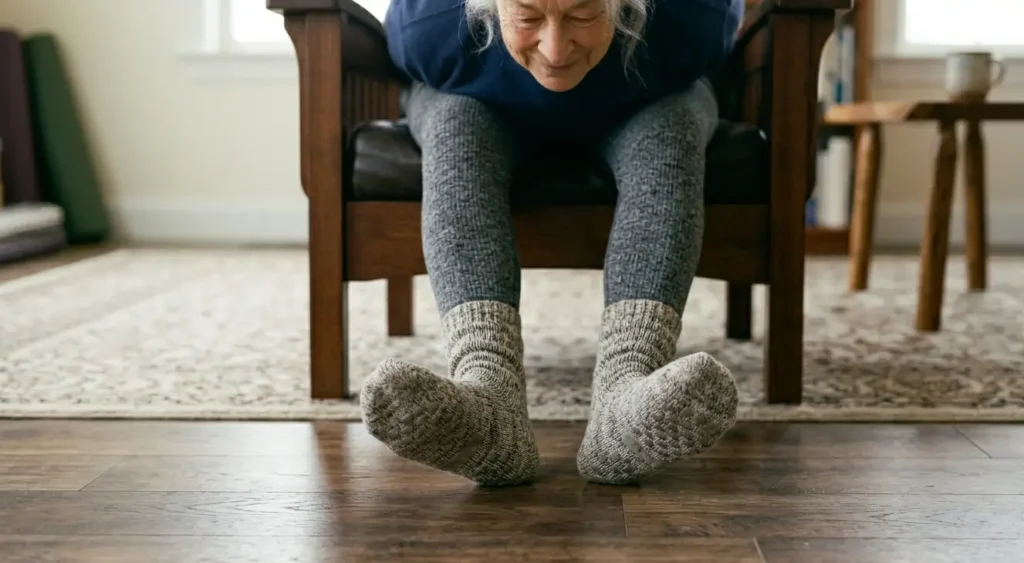
As we age, proprioception—the body’s awareness of position and movement—may become less responsive. This can affect balance and coordination.
Chair yoga for balance and stability focuses on slow, supported movements. Practicing these movements mindfully can help you become more aware of how your body moves in space.
Over time, this awareness may support better coordination and confidence in daily movement.
Because of this, chair-based exercises are often included in senior-friendly movement routines that focus on stability and controlled motion.
Does Chair Yoga Really Work?
It is natural to feel a bit skeptical. If you have spent your life believing that exercise must be strenuous or “high-impact” to be effective, looking at a chair might make you wonder: Is chair yoga a scam?

The short answer is that chair yoga actually works, but its “work” is different from a gym workout; it aims to keep you mobile and pain-free when you perform yoga poses.
When we ask, “Is chair yoga effective?“ We should look at clinical outcomes from research from institutions like the National Institutes of Health (NIH), which has shown that seated yoga provides measurable improvements in gait speed (helping you walk more briskly and steadily), grip strength, and pain interference for older adults.
A common misconception is that “seated” means “inactive.” In reality, chair yoga really works because it utilizes isometric contraction. This involves tensing a muscle without moving the joint, like pushing your feet firmly into the floor while sitting tall.
It is widely used in senior centers, rehabilitation programs, and wellness clinics across the USA and Canada.
What to Expect as You Continue Practicing
Chair yoga works gradually. At first, changes may feel subtle to you, but if you keep practicing consistently, you will come close to your goal of mobility.
After 2 weeks
You may notice less stiffness in your joints and ease when you sit or stand up.
After 1 month
Many seniors feel more balanced, more confident while walking, and more comfortable in their postures.
After 3 months
You will notice improved strength in the legs and core, and greater independence in daily activities.
Progress with chair yoga is not about instant result is about consistency and doing it in your comfort zone. It is about winning small but winning daily.
What Improvements Are Realistic?
Chair yoga is not about pushing the body but about gently helping it move better, one step at a time, and slowly building lost confidence.
Because movements are performed while seated, the brain can focus on coordination rather than fear of falling, a common psychological barrier in older adults. By removing the anxiety, you can achieve the following:
Increased range of motion
Simple stretches can help you keep your joints moving.
Improved posture awareness
Sitting and moving mindfully helps you sit taller, breathe more easily, and reduce slouching.
Better balance confidence
Even while seated, your body practices staying centered and steady, which can carry over into standing and walking.
Gentle muscle strengthening
Light movements wake up the muscles that support your hips, legs, and back—without straining them.
Enhanced circulation
Slow, rhythmic movements help blood flow, which can reduce swelling and bring warmth to tired limbs.
The Neurological Component
As we get older, the communication between our mind and body somewhat becomes hazy. By practicing slow, supported movements in a chair, the nervous system has time to process what the body is doing.
Chair yoga enhances somatic awareness, the ability to perceive subtle bodily sensations, which supports safer and more intentional movement patterns in the practitioner.
When you are better at “feeling” where your body is in space, you can move more efficiently.
What Chair Yoga Is Not
Chair yoga is supportive, easy on the body, and improves your well-being, but it is important to have clear, realistic expectations.
- Not Rapid Fat-Loss Cardio: It focuses on flexibility and balance. It is not designed to be a calorie-burning workout.
- Not a Replacement for Medical Therapy: This practice is a supplement to your wellness. It shouldn’t replace prescribed physical therapy, medication, or professional advice.
- Not a Cure for Chronic Conditions: While it can effectively manage symptoms, like reducing the stiffness of arthritis, it is not a cure.
What chair yoga offers is a body-friendly, steady way to improve the movement of your body.
The Benefits of Chair Yoga for Seniors
Chair yoga is designed to support your body as it is today, not based on expectations or pressure. When practiced with consistency, chair yoga for seniors can help maintain comfortable movement and support overall mobility.
Some of the most meaningful benefits include:
Joint Mobility & Range of Motion
Chair yoga exercises for seniors use slow, controlled movements that allow joints to move within a comfortable range.
These gentle movements may support joint flexibility and help reduce feelings of stiffness, making everyday activities like sitting, standing, and reaching feel more manageable.
Muscle Engagement & Support
After the age of 60, natural changes in muscle mass (often referred to as sarcopenia) can affect strength and energy levels.
Gentle chair yoga for seniors includes light, resistance-based movements that help keep muscles engaged. Over time, this can support the functional strength needed for daily activities like standing, walking, and maintaining posture.
Balance & Stability
Chair yoga for balance and stability focuses on slow, mindful movement patterns.
As we age, proprioception (the body’s awareness of position) may become less responsive. Practicing controlled chair-based movements can help you stay more aware of how your body moves, which may support better coordination and stability over time.
Circulation & Movement Support
Light muscular activity during seated yoga exercises for seniors encourages natural blood flow throughout the body.
Regular movement, even in a seated position, can support overall mobility and help you stay active throughout the day.
Stress Reduction & Relaxation
Breathing plays an important role in chair yoga for beginners and seniors.
Slow, steady breathing, especially longer exhalations, can help your body shift into a more relaxed state. This is often associated with the parasympathetic nervous system, sometimes called the body’s “rest and reset” mode.
With regular practice, this can help you feel calmer, more present, and at ease.
Can You Lose Weight With Chair Yoga?
Many seniors quietly wonder: Can you lose weight with chair yoga? Especially when weight starts affecting daily comfort and mobility, and traditional exercise feels difficult or unsafe.
The honest answer is that chair yoga for seniors is not designed as a rapid weight loss workout. However, it can still play a supportive role in an overall weight management routine.
Gentle chair yoga exercises can help you stay consistent with movement, maintain muscle engagement, and build a more active daily routine. Over time, this can support habits that are often associated with long-term weight management.
The Calorie Reality
Chair yoga is not a high-calorie-burning activity.
Instead of focusing on intensity, seated yoga for beginners and seniors focuses on consistency and ease of movement. This makes it easier to stay active regularly, which is an important part of maintaining an overall healthy lifestyle.
The Movement & Metabolism Perspective
Chair yoga exercises for seniors involve light muscle engagement through controlled, low-impact movements.
Regular movement can help maintain muscle activity and support daily function. Since muscle plays a role in overall energy use, staying active—even gently—can contribute to long-term metabolic balance.
A Practical Example
Imagine you want to go for a walk but feel limited due to stiffness or low confidence in movement.
With regular chair yoga practice, your body may begin to feel more comfortable with simple movements. This can make it easier to return to activities like walking or light exercise over time.
In this way, chair yoga acts as a starting point, not a replacement.
Chair Yoga vs Walking
Walking and chair yoga serve different purposes.
- Walking is more focused on cardiovascular activity and endurance
- Chair yoga for seniors focuses on mobility, balance, and controlled movement
They work best together.
Walking helps you stay physically active, while chair yoga supports flexibility, stability, and confidence in movement—making it easier to stay consistent with both.
The Bottom Line
Chair yoga is not a quick weight loss solution.
But as a low-impact, beginner-friendly movement practice, it can support the habits and consistency that are often needed for long-term health and weight management.
How to Do Chair Yoga Safely
Chair yoga is meant to be supportive and non-stressful. Before starting with Mindfullyoga’s beginner-friendly poses, it’s important to create a safe and comfortable setup for your chair yoga practice at home.
Choosing the Right Chair
Before you learn how to do chair yoga, choosing the right setup is your first step. For chair yoga for seniors and beginners, select a chair without armrests and with a stable, firm base.
A proper chair helps you stay supported during all seated yoga exercises.
The 90-90-90 Rule
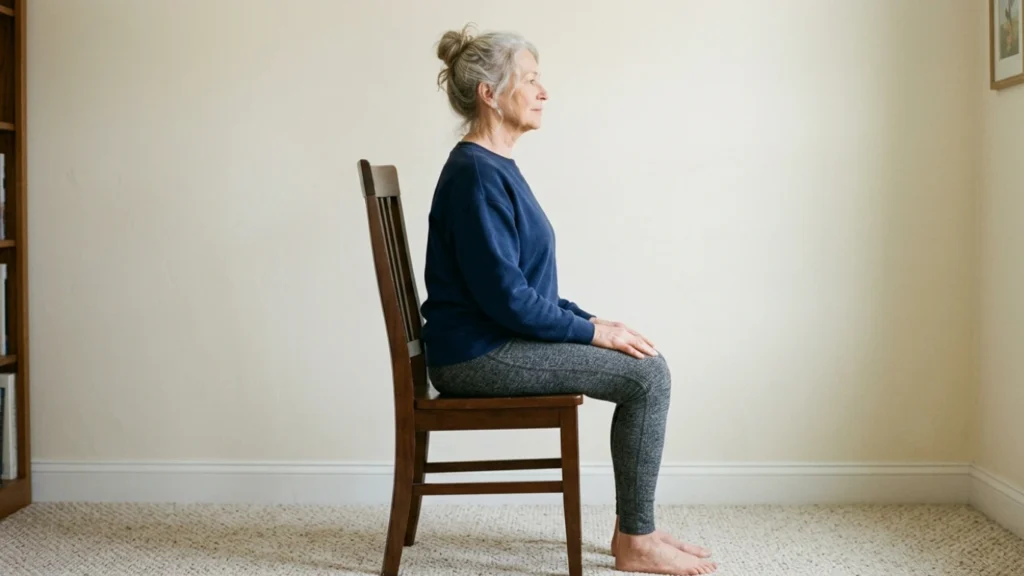
To support safe movement during chair yoga exercises for seniors, follow the 90-90-90 rule.
Proper alignment guidelines:
- Hips at approximately 90 degrees: Sit towards the front of the chair and center your weight on your sit bones.
- Knees at 90 degrees: Keep your thighs parallel to the floor.
- Ankles directly under knees at 90 degrees: Keep your feet flat on the ground to create a stable base.
This alignment supports a more natural posture and reduces unnecessary strain during movement. When your body is positioned this way, your spine can stay upright, making breathing and gentle movements feel more comfortable.
Safe Setup Checklist
Creating a safe environment is the first step toward a consistent chair yoga routine for seniors. Take a few minutes to prepare your space so you can focus fully on your movements.
Setup checklist:
- Chair Against a Wall: Place the chair against a wall for added stability.
- No Wheels: Use a stationary, four-legged chair without wheels.
- Non-Slip Flooring: Ensure your chair is on a stable surface. Use a mat or carpet if needed.
- Feet Flat on the Floor: Keep your feet grounded. If the chair is too high, use a cushion under your feet.
- Neutral Spine: Sit tall without slouching or over-arching your back. This supports better breathing and control during seated yoga practice.
Simple Beginner Movements
If you are new to chair yoga for beginners, start slowly and pay attention to how your body feels. Move in a controlled way and pause if anything feels uncomfortable.

These basic chair yoga exercises are simple and accessible:
- Seated Neck Stretch: Slowly drop your right ear toward your right shoulder. Maintain the pose for 3–5 breaths; repeat on the left side.
- Shoulder Rolls: Inhale as you lift your shoulders toward your ears, then exhale as you roll them back and down. This helps reset posture.
- Seated Twist: Place your left hand on your right knee and gently turn your torso to the right. Hold briefly, then repeat on the other side. Keep your spine tall.
- Leg Extensions: Hold the sides of the chair and slowly extend one leg forward, then switch.
- Ankle Circles: Lift one foot slightly and rotate the ankle in slow circles in both directions.
- Supported Forward Fold: With your feet wide and flat, gently hinge forward and rest your forearms on your thighs.
Continue Your Practice
For more structured guidance, explore these resources:
- A complete chair yoga guide for daily practice
- Movement-focused guidance for joint comfort
- A comprehensive 28-day chair yoga intensive
Common Mistakes to Avoid in Chair Yoga
When learning how to do chair yoga, it is equally important to understand what not to do. Avoiding these common mistakes in chair yoga for seniors and beginners can help you practice more safely and with better control.
Holding Your Breath
This is one of the most common mistakes in seated yoga exercises. When a movement feels challenging, it’s natural to hold your breath without realizing it. This can make the body feel tense and uncomfortable.
Try to keep your breathing slow, steady, and relaxed throughout your chair yoga routine.
Locking Your Joints
Whether it’s your elbows during an arm stretch or your knees during a leg extension, avoid locking your joints into a rigid position.
Keep a slight bend (micro-bend) so your muscles stay gently engaged during the movement.
Leaning Too Far Forward
Maintain an upright position during your chair yoga practice. Leaning too far forward can affect your balance and reduce stability.
Focus on staying centered and supported in the chair.
Moving Too Quickly
Chair yoga is designed to be slow and controlled. Fast or jerky movements can make the practice feel less stable.
Move gently and give your body time to adjust during each movement.
Ignoring Body Signals
There is a clear difference between a mild stretch and sharp discomfort. If something doesn’t feel right, pause and adjust the movement.
Your chair yoga for beginners journey should feel supportive, not forced.
By staying mindful of these simple points, you can turn your chair yoga routine into a more comfortable and sustainable practice.
How Often Should Seniors Practice Chair Yoga?
Showing up every day is what transforms effort into measurable progress. When asking how often seniors should do chair yoga, the goal is to build a simple and sustainable habit that fits into daily life.
For the best results, aim for:
3–5 Days Per Week
Practicing chair yoga for seniors a few times a week helps your body stay familiar with the movements and makes it easier to stay consistent over time.
5–10 Minutes Per Session
You don’t need long workouts. Short, focused chair yoga sessions of 5–10 minutes are often more practical and easier to maintain.
Rest When Needed
Always listen to your body. If you feel tired or notice discomfort, it’s okay to take a break and return when you feel ready.
Consistency Over Intensity
Doing a gentle 5-minute chair yoga routine regularly is more effective than doing a long or intense session occasionally.
By keeping your sessions short and frequent, you naturally build a rhythm that supports regular movement and long-term consistency.
Getting Started
If you’re looking for a simple way to begin, we’ve created structured resources to help you stay consistent:
A quick and practical chair yoga for beginners sequence for days when you just need a gentle reset.
Frequently Asked Questions
To help you decide, here are some common questions seniors ask about chair yoga for beginners and seniors.
What is chair yoga good for?
Chair yoga is commonly used to support flexibility, joint mobility, gentle strength, and overall range of motion in older adults. Many people also find that it promotes relaxation and supports a sense of physical ease through slow, mindful breathing.
Is chair yoga safe for seniors?
Yes, chair yoga for seniors is widely considered a low-impact and supportive form of movement because it provides stability through a chair. It removes the need for floor transitions, making it more accessible for those with balance or mobility concerns.
Can seniors do yoga sitting down?
Absolutely. Many traditional yoga movements can be adapted into seated chair yoga exercises, allowing seniors to practice comfortably without needing to get on the floor.
Does chair yoga help with balance?
Chair yoga includes slow, controlled movements that can support body awareness and coordination. Over time, this may contribute to better balance and stability in daily movements.
Is chair yoga as good as walking?
Walking and chair yoga serve different purposes. Walking supports cardiovascular activity, while chair yoga exercises for seniors focus more on flexibility, mobility, and controlled movement. For many, a hybrid approach yields the most effective results.
Does chair yoga really work for seniors?
Chair yoga is widely used in senior fitness programs and wellness routines. With regular practice, many seniors report feeling more comfortable in their movements and more confident in daily activities.
Why This Guide Prioritizes Safety
This guide by Mindfullyoga is based on widely accepted principles of senior fitness, fall prevention, and movement awareness. It focuses on helping older adults approach movement in a way that feels stable, controlled, and appropriate for their current ability level.
The approach emphasizes gradual progression, a comfortable range of motion, and simple, supported movements. These elements are commonly used in chair yoga for seniors to encourage safe and consistent practice.
Rather than pushing intensity, this guide prioritizes control, awareness, and functional stability, helping you build confidence in everyday movement at your own pace.
Final Thoughts — Gentle Movement for Sustainable Aging

As you move forward, remember that the most effective exercise is the one you can do safely and consistently. Chair yoga for seniors is not about achieving perfect poses—it’s about reconnecting with your body in a way that feels supportive, stable, and sustainable.
Over time, small and steady movements through chair yoga practice can help you feel more comfortable in your daily activities. The goal is not intensity, but consistency. Not pressure, but progress.
Whether you are starting chair yoga for beginners at home or continuing your routine, always listen to your body. It will guide you when to move and when to rest. In chair yoga, stability comes before intensity, confidence comes before complexity, and calmness comes before chaos.
Start where you are, move at your own pace, and let each session be a step toward feeling more at ease, balanced, and supported in your body.
Also Read: Pilates vs Yoga for Seniors: Which is Better?
Also Read: 45-Minute Chair Yoga Sequence (Free Printable PDF Download for Seniors & Beginners)
Also Read: 5 Easy Snacks for Balancing Insulin Resistance Naturally